Art or Content?
How the Digital Environment Is Changing the Way We Experience Art
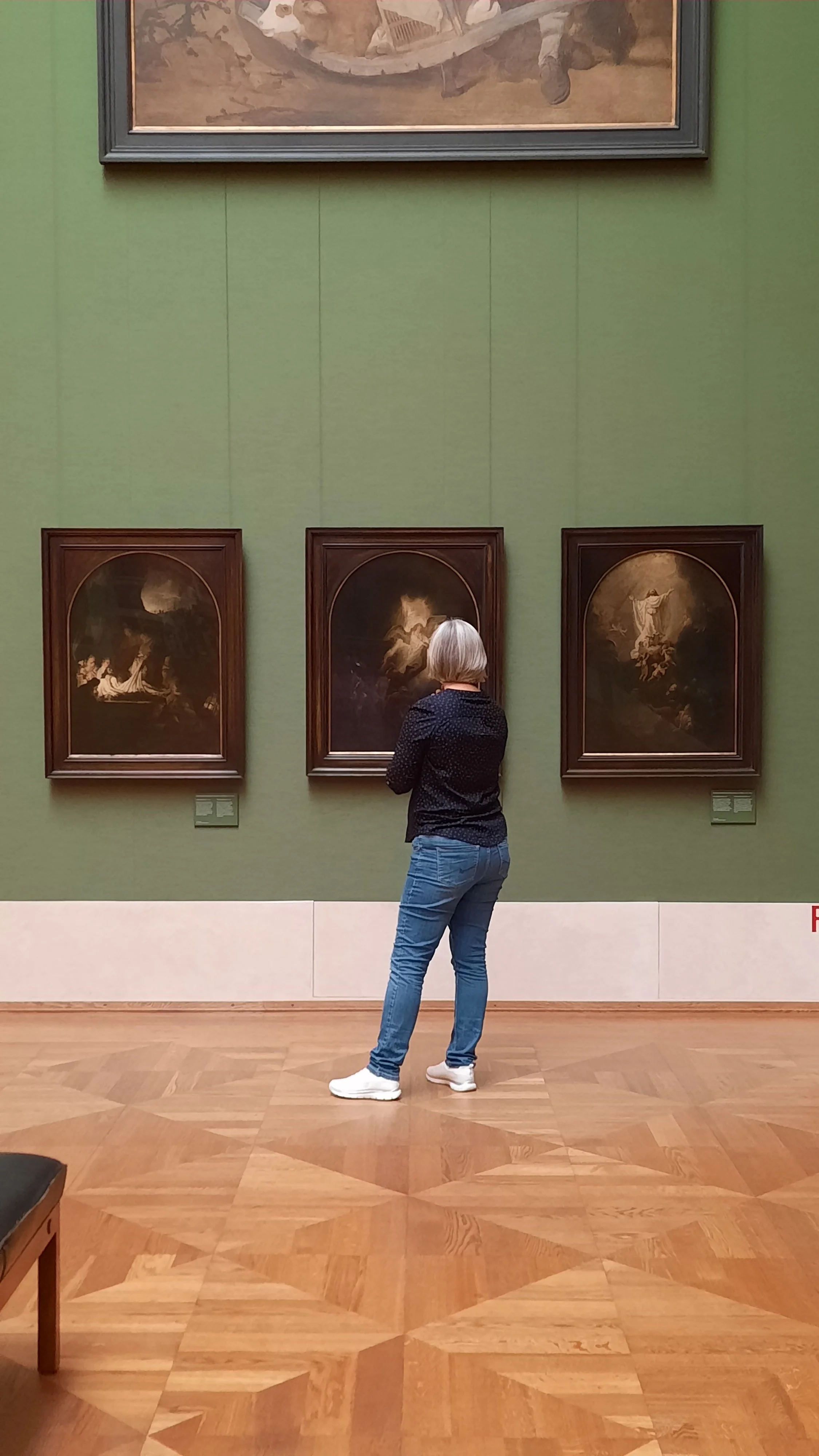
There is one thought I keep coming back to.
Today, a work of art can appear in the very same feed as a sneaker advertisement, a meme, a salad recipe, or a video of a cat. Each image occupies the same screen, requires the same swipe of a finger, and exists within the same endless stream.
The artwork itself does not change. It remains just as profound, meaningful, and accomplished as before. What changes is the environment in which the encounter between the artwork and the viewer takes place. And perhaps this subtle shift has become one of the most significant cultural consequences of the digital age.
Throughout history, works of art have never existed in isolation. They have always been experienced within carefully defined environments. A cathedral, a palace, a museum, a private collection, a gallery—each of these spaces quietly shaped the rhythm of attention long before a viewer stood in front of a painting. Architecture, light, silence, distance between works, even the pace of walking through a room became part of the experience itself. These environments never simply displayed art. They taught us how to look.
The digital feed follows an entirely different logic.
Every image survives only for a few seconds before giving way to another. Works of art now appear alongside advertisements, breaking news, humour, travel photographs, short videos, and fragments of everyday life. The algorithm makes no distinction between them. It does not recognise artistic intention, historical significance, or years of patient work. To the system, every image simply becomes another element competing for attention.
The question, however, is not whether the algorithm can distinguish between them. The more interesting question is whether we still can.
Human perception has never existed independently of context. We never experience an object entirely on its own; we experience it together with the environment that surrounds it. Context is not merely a background. It quietly shapes expectation, attention, and the amount of time we are willing to devote to what stands before us. If a work of art repeatedly appears as just another element in an endless feed, do we gradually begin to approach it in the same way we approach everything else?
Perhaps this explains why we have become increasingly comfortable judging a painting almost instantly. Beautiful. Uninteresting. Clear. Strange. I like it. I don't. And then we continue scrolling. Not because art has become less profound, but because the environment has trained us to decide before genuine looking has even begun.
This is where the distinction between content and art begins to emerge.
Content is designed to capture attention. Art asks for attention before it begins to reveal itself. Content is often consumed once. A great painting rewards repeated encounters. Content follows the rhythm of immediacy. Art follows the rhythm of time. For centuries, these two forms of visual experience occupied entirely different environments. Today, for the first time in history, they increasingly share the same one.
This does not diminish the value of art. Nor does it suggest that digital platforms are somehow harmful to culture. Quite the opposite. Social media has transformed access to art in remarkable ways. Today we can discover artists, collections, exhibitions, and museums that would have remained completely outside our reach only a generation ago. For artists themselves, digital platforms have opened opportunities for direct dialogue with audiences across the world in ways that were previously unimaginable.
The question is not whether this transformation is good or bad. The question is what it quietly changes in us.
If the environment shapes the way we pay attention, can we preserve the depth of looking that art has always required? Or is careful observation gradually becoming a practice we must consciously protect?
A painting has not become content. Yet it now exists within an environment that often treats it as content.
Perhaps the greatest luxury today is no longer the opportunity to see a work of art. Perhaps it is the ability to remain with it long enough for it to begin speaking.
