The Distance Between Looking and Seeing
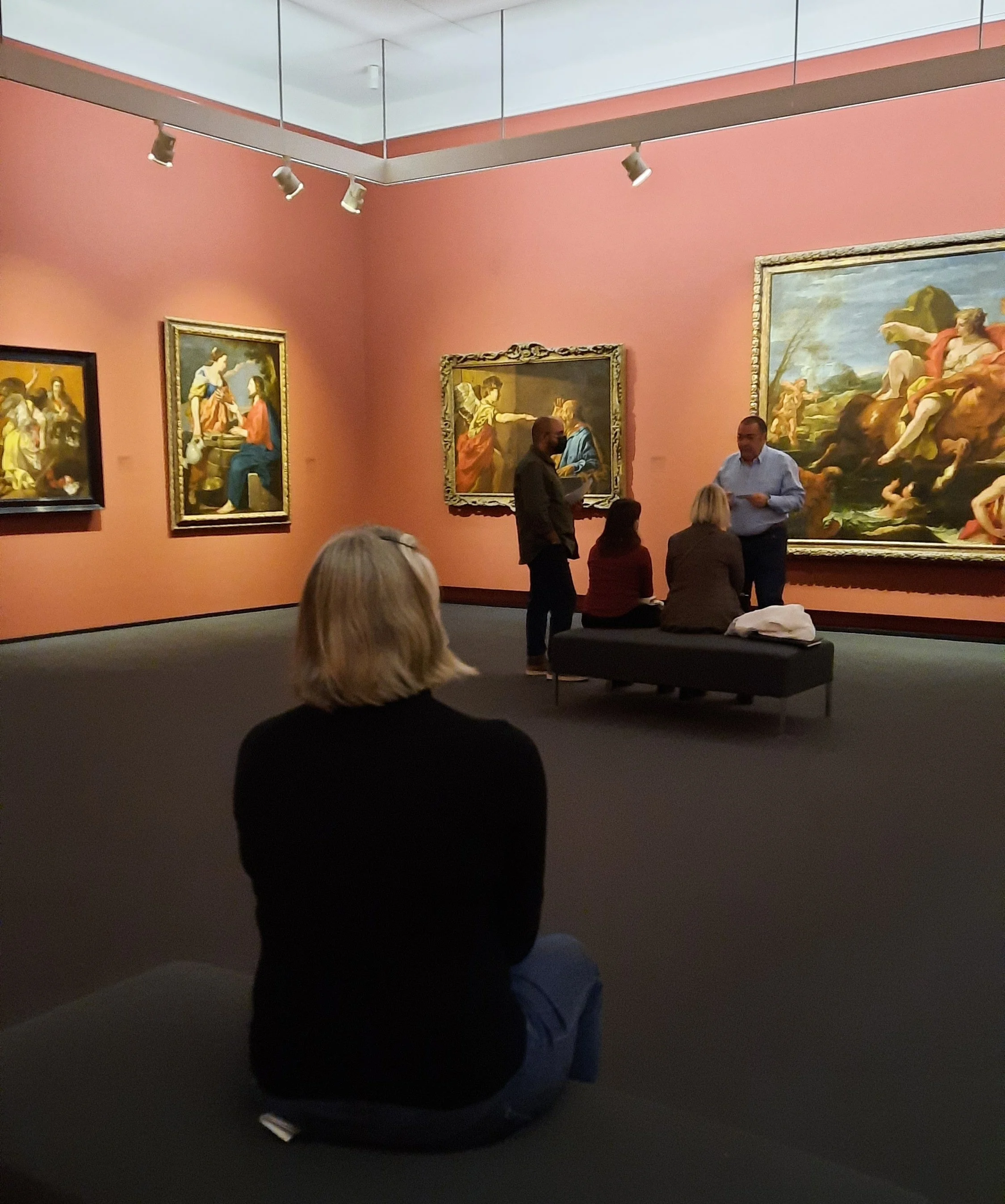
Over the years, while visiting museums, biennials, and contemporary art exhibitions across different countries, I have found myself paying as much attention to the viewers as to the artworks themselves. There is one scene that repeats itself again and again. A visitor approaches a painting, studies it for a few seconds, reads the wall label, looks back at the work, and then quietly moves on. Sometimes the entire encounter lasts less than a minute. During that time, they have certainly looked at the artwork. But have they truly seen it?
To me, this is where one of the most important distinctions in the experience of art begins. Looking and seeing are not the same. Looking is an act performed by the eyes. Seeing is a far more complex process. It gradually engages attention, memory, personal experience, the ability to notice subtle relationships, and the willingness to remain with a work long enough for it to become more than an image. It becomes an experience.
Contemporary culture has taught us to move quickly. We make decisions within seconds, evaluate images almost instantly, and scroll through hundreds of photographs every day. Inevitably, this habit follows us into museums. We expect works of art to reveal themselves just as quickly as everything else that competes for our attention. Yet art rarely operates according to the logic of speed. Some works resist first impressions. They do not seek to impress immediately, nor do they attempt to explain themselves at first glance. Instead, they begin to unfold only when the viewer stops searching for an instant answer and allows observation to replace expectation. This is why time becomes part of the artwork itself.
We often speak about composition, material, technique, concept, historical context, or curatorial intention. Far less often do we consider another essential element: the duration of the encounter between a work of art and its viewer. Perhaps that encounter shapes perception more profoundly than any amount of prior knowledge.
The most powerful works rarely reveal themselves all at once. They ask for something that has become increasingly rare today: patience. Not because they are deliberately obscure, but because meaningful experience cannot be rushed. Art is not something to be consumed. It is something to spend time with. Perhaps this is why the works we remember most are not always the ones that make the strongest first impression. They continue to exist within us long after we have left the museum. We return to them weeks, months, sometimes even years later, only to discover something we had never noticed before. The artwork has not changed. We have.
The more I observe the way people engage with art, the more convinced I become that the true distance between looking and seeing is measured neither by the amount of information we know about an artwork nor by the length of time we spend in a museum. It is measured by the quality of attention we are willing to offer. Because sometimes a work of art truly begins to exist not at the moment we first look at it, but at the moment we stop trying to understand it too quickly.
