The Colour I Couldn't Forget
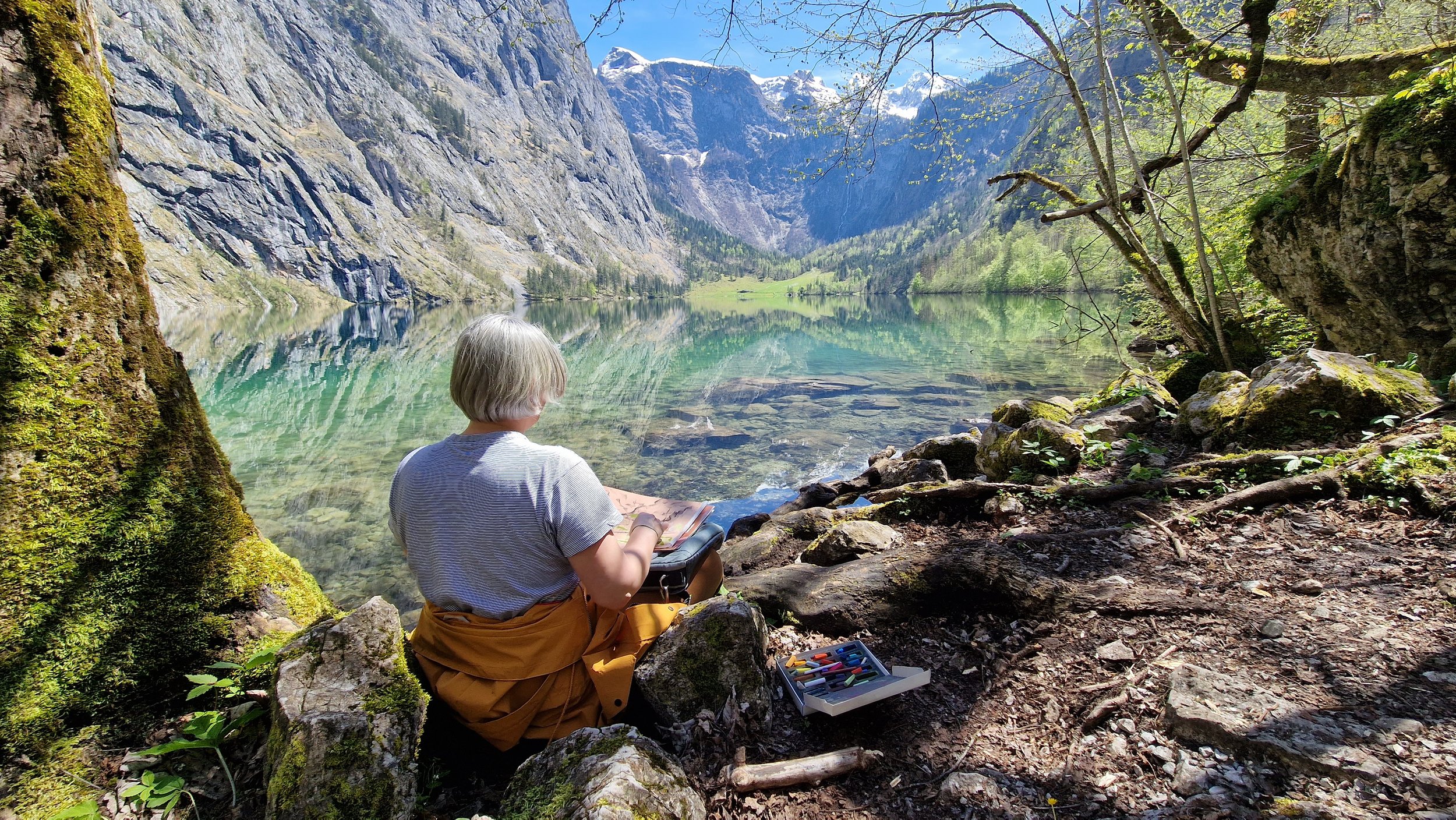
We often speak about colour as though it were a property of objects. The blue of the sky. The green of a field. The red of a flower. Yet anyone who has spent enough time looking knows that colour rarely belongs to things themselves. It belongs to a particular meeting of light, matter, atmosphere, distance and time. Change any one of them, and the colour quietly disappears.
Perhaps this is why some colours can never be repeated. Not because the pigment does not exist, but because the moment that created the colour existed only once.
Years ago I saw evening light resting on an old stone wall. There was nothing extraordinary about the wall itself. Nothing about the colour would have attracted attention if it had appeared on a paint chart. Yet for a few brief minutes the air, the fading sunlight and the surface combined into something I have never encountered again.
I have forgotten countless colours since then. I have never forgotten that one.
The longer I paint, the less I believe that artists invent colour. We spend much of our lives trying to recognise something we have already seen.
Standing before a palette is rarely an exercise in mixing pigments. More often, it is an attempt to move closer to a memory that refuses to become precise. We remember the experience with remarkable clarity, yet the colour itself remains strangely beyond reach. Every adjustment feels almost right. Never entirely right.
Perhaps colour is not what memory preserves. Perhaps memory preserves relationships.
The coolness of evening against warm stone. The silence that surrounded the landscape. The humidity of the air. The distance between the observer and the horizon. The colour survives because everything around it survives.
This may explain why certain paintings continue to affect us long after we leave the museum. We often believe we remember their colours. Perhaps what we truly remember is the atmosphere those colours created within us.
The older I become, the less interested I am in asking whether a colour is accurate. A far more difficult question is whether it is inevitable. Whether no other colour could exist in that place without changing the entire experience of the painting.
Perhaps the colours we never forget are not the rarest ones.
Perhaps they are simply the ones that, for a brief moment, allowed the world to appear exactly as it could not have appeared in any other way.
