A Painting Never Speaks to Just One Person
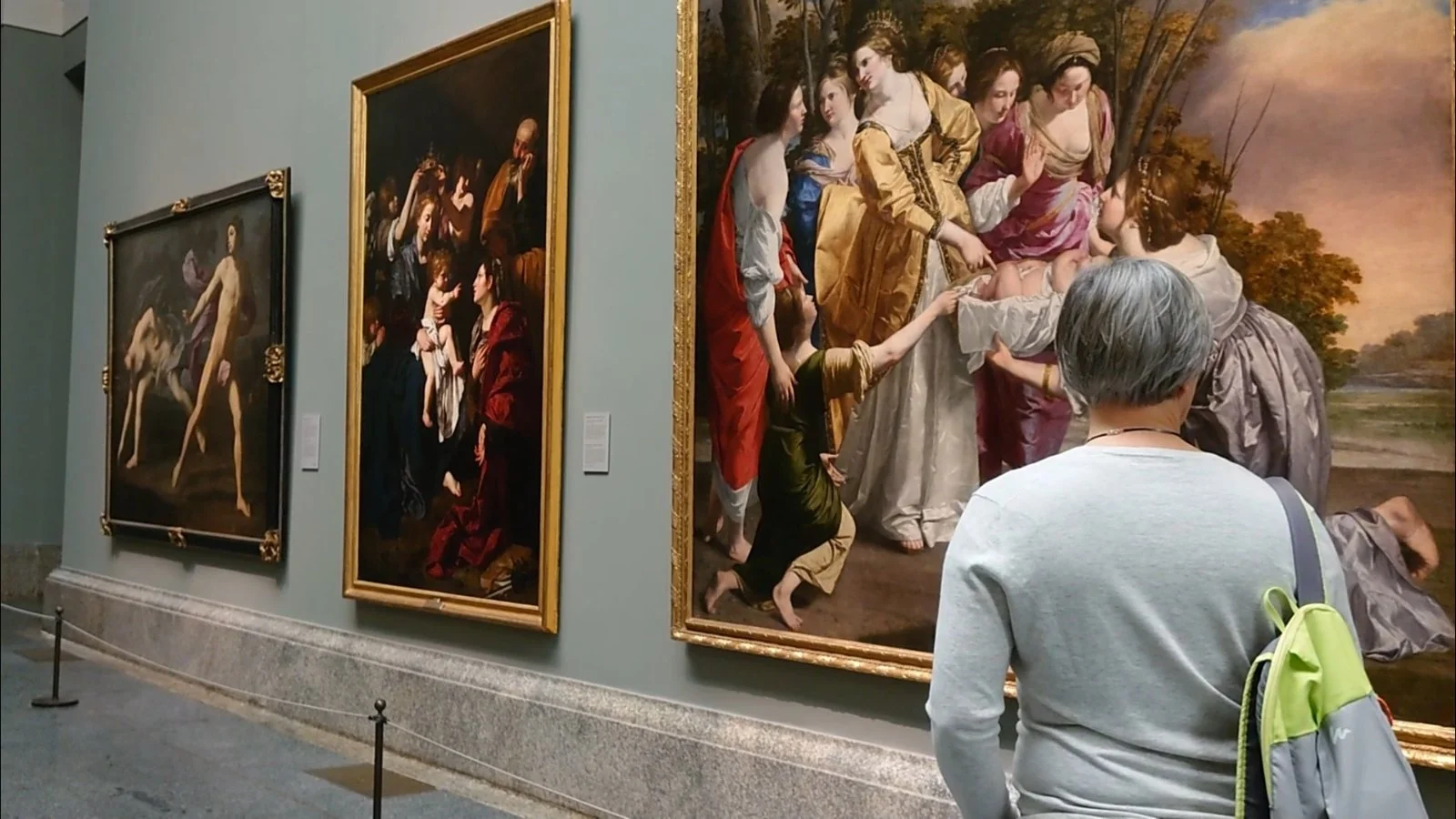
We often imagine the encounter between a viewer and a work of art as a private conversation. An artist creates a painting. A viewer stands before it. Understanding either happens or it doesn't, and the story seems complete.
Yet I have gradually come to believe that this is only the beginning.
A painting rarely belongs to a single encounter. Instead, it becomes a place where people who will never meet one another begin, unknowingly, to share the same intellectual space. They may live in different countries, belong to different generations, or come from entirely different professions. What connects them is not their background, but the questions a work of art invites them to ask.
It no longer surprises me that two people can look at the same painting and see completely different things. What fascinates me is what happens next. Those differences often begin to enrich rather than oppose one another. One person notices a relationship that another overlooked. Someone else recognizes an emotion that had remained invisible. Gradually, the work expands - not because the painting itself has changed, but because every thoughtful encounter reveals another dimension that was already there.
Perhaps this is why significant works of art can never be exhausted by a single interpretation. Not because they are intentionally obscure, but because human experience is infinitely more complex than any explanation we can give. Every viewer arrives carrying their own memories, losses, discoveries, questions, and hopes. A painting does not erase those experiences. It receives them.
For this reason, I no longer think of a painting as a finished object. Physically, it may be complete the moment the final layer dries. Culturally and intellectually, however, its life has only begun.
The real life of a work of art unfolds beyond the studio and beyond the museum walls. It continues wherever people return to it, question it, disagree about it, or unexpectedly discover something they had never considered before. Sometimes the most meaningful part of an artwork is not the answer it seems to offer, but the conversation it quietly continues to generate.
Perhaps this is also why art survives its creators. Museums preserve canvases. Conservators preserve pigments. But every generation preserves something equally important: the willingness to look again. Each new viewer begins a conversation that no previous viewer could have had, because every life brings its own perspective to the same work.
This, to me, is one of the clearest signs of enduring art. It never insists on the final word. It leaves room for the next person, the next question, and the next way of seeing.
When I paint, I do not expect every viewer to arrive at the same conclusion.
In fact, I hope they don't.
If a painting remains alive, it is because it continues to think differently in the mind of every person who spends time with it.
Perhaps the value of a work of art cannot be measured solely by the number of people who have seen it, nor even by the number who believe they understand it.
Perhaps its true measure lies in the number of original thoughts that came into existence simply because someone chose to remain with it a little longer.
