Before the Painting Became the Painting
The history of an old painting often has to be reconstructed centuries later. X-radiography can reveal earlier compositional decisions, infrared examination can help uncover preparatory drawing and changes beneath the paint layers, while microscopy and cross-sections allow researchers to study the sequence of materials. The researcher begins with the finished surface and works backwards, trying to understand what happened in the studio before the work acquired the form in which we know it.
With a contemporary painting, much of this information is still directly accessible. The artist knows which materials were used and remembers the sequence of the work; intermediate states may survive in photographs and video. Once the painting is finished, however, this information gradually becomes detached from the object itself. A few years later, memory is less precise, files are lost or stripped of context, and what was once an obvious fact of the working process becomes information that has to be established again.
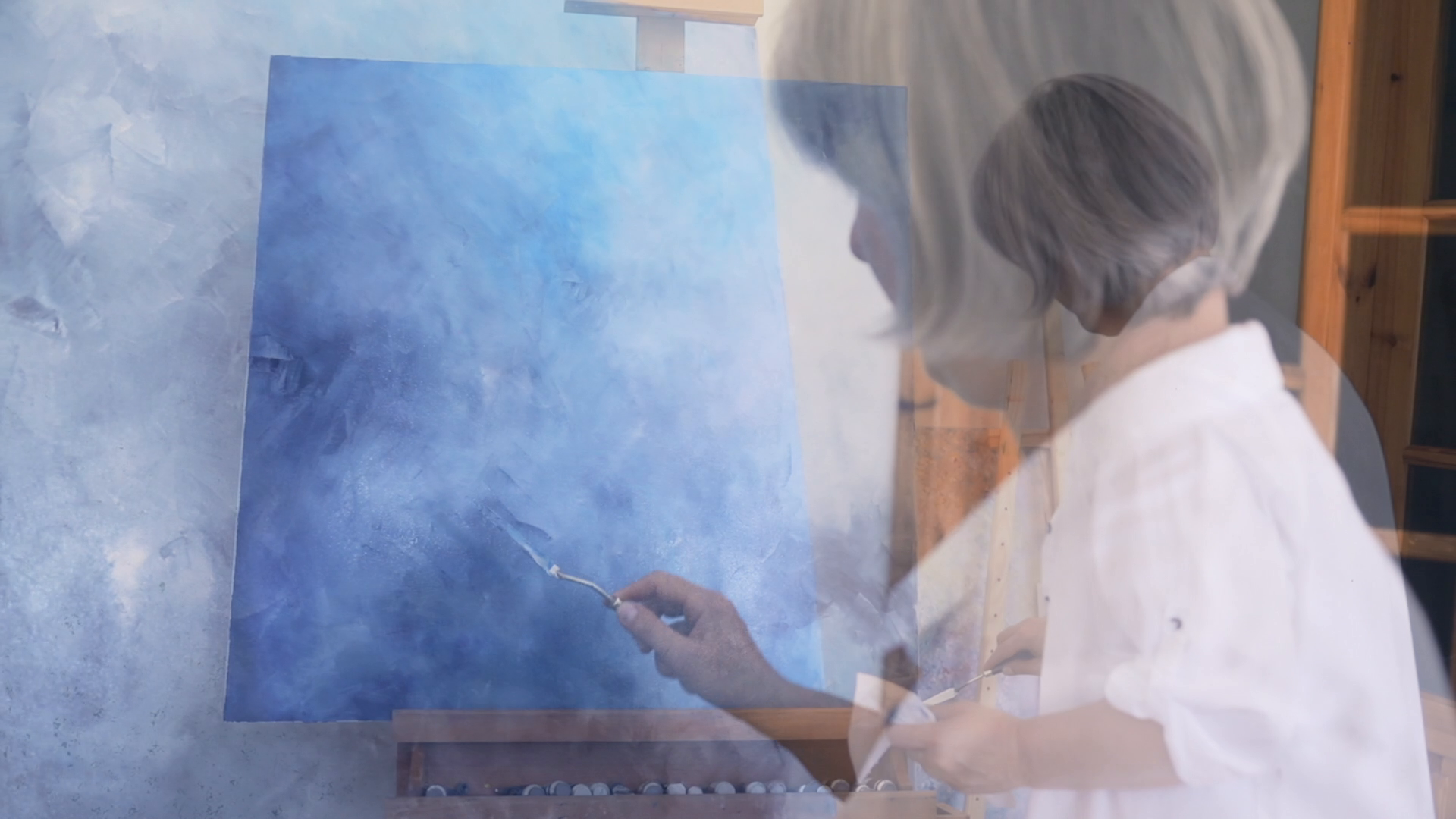
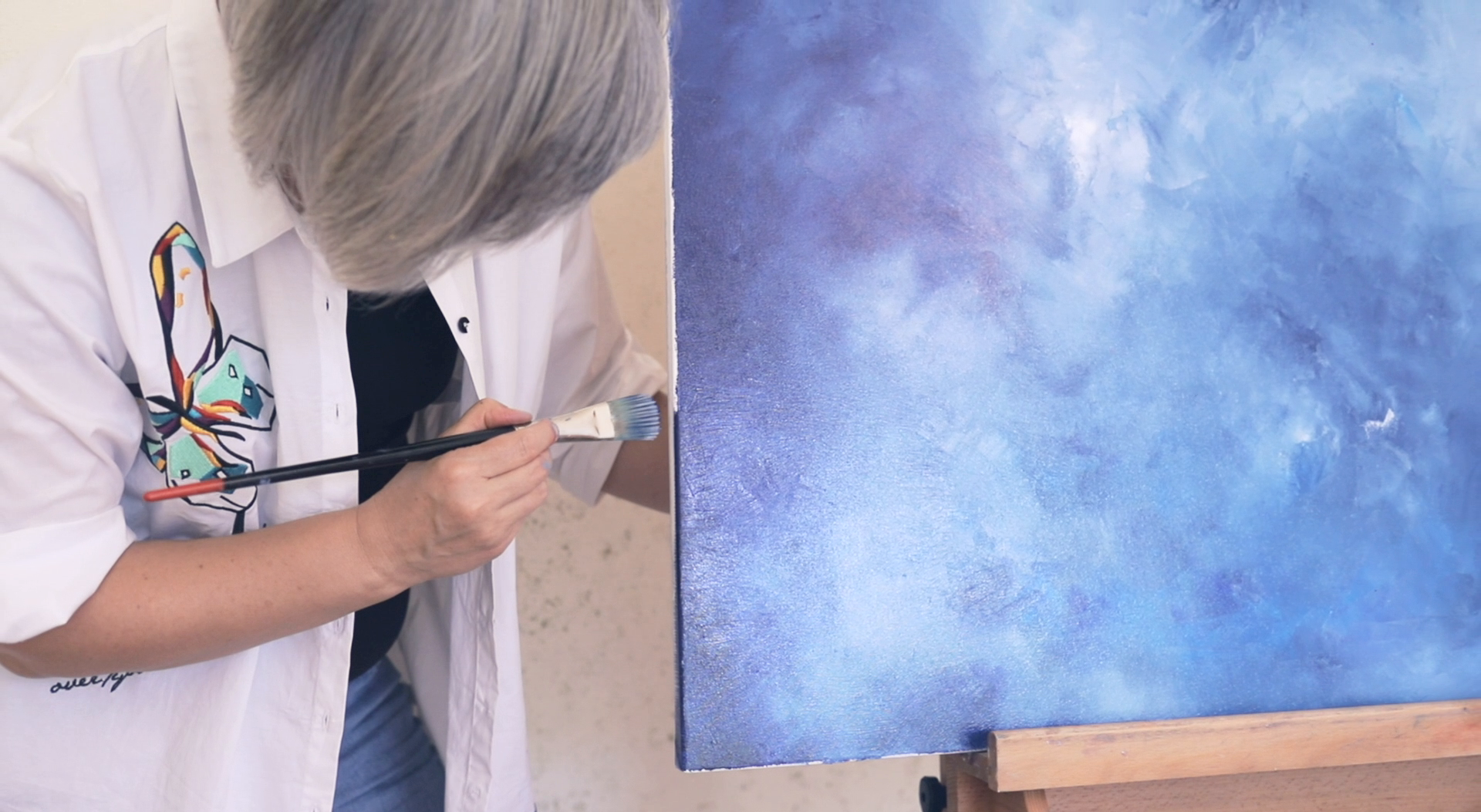
I have a video recording of the making of one of my paintings. Returning to it after the work was finished, I noticed the difference between what the recording had preserved and what now exists on the canvas. The camera captured states of the surface that a viewer will never be able to see directly again. A cool colour now occupies a place where a warmer one once existed; some boundaries shifted several times; one passage appeared early and survived almost unchanged, while the area beside it went through several successive layers. In some places, earlier paint still contributes to the visible colour through what was applied above it. Elsewhere, it has been completely covered.
Nothing in the finished painting tells us how different those paths were. Every area now belongs to the same surface and the same present moment of the work, although each was formed at a different point in time and retains a different degree of its previous states. The video allows us to take a particular passage and trace it backwards: to see the colour beneath the one visible now, an earlier position of an edge, or the state of the surface before another layer was applied. We can then return to the finished image. The passage itself has not changed, but the amount of information we bring to looking at it has.
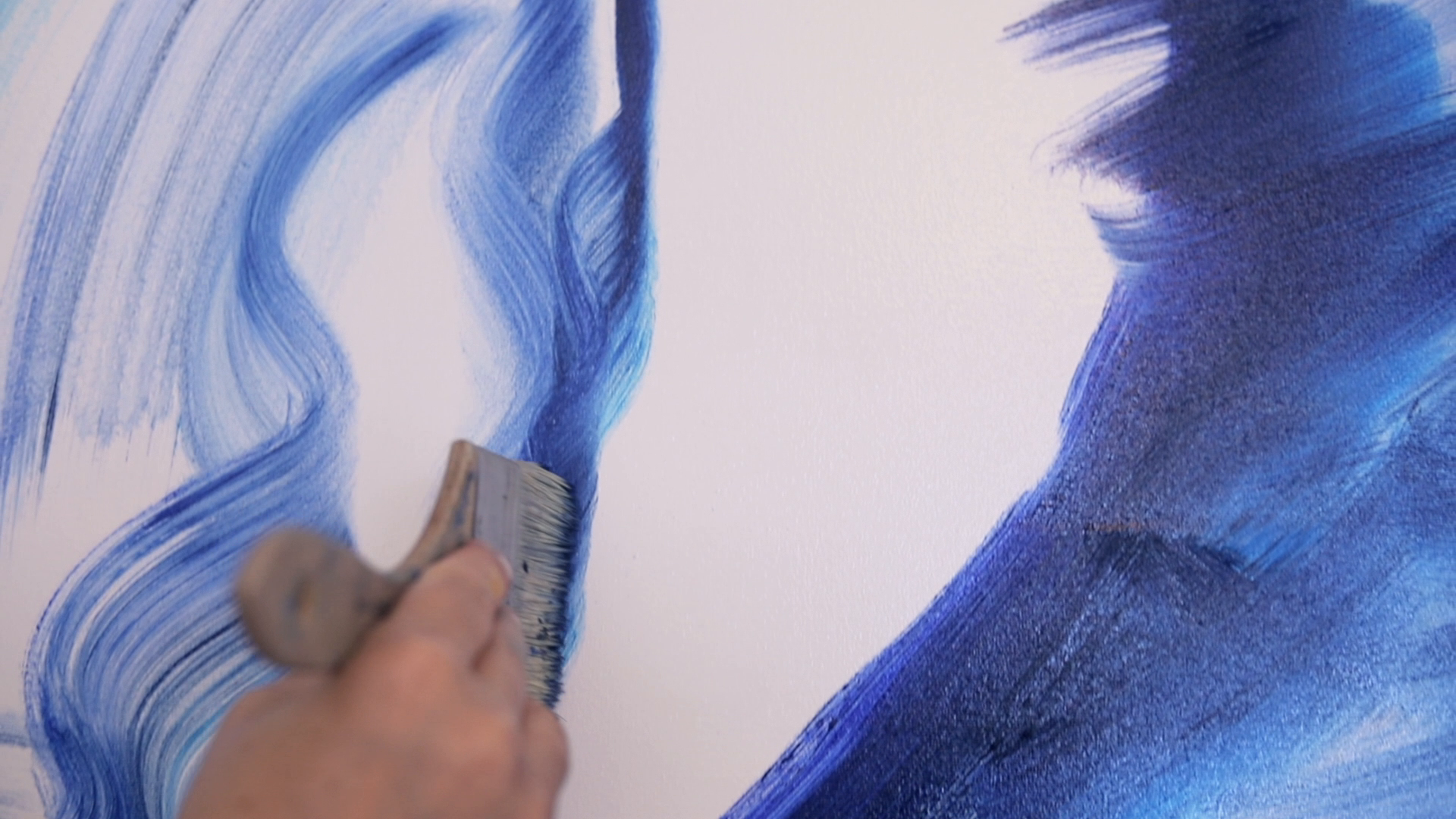
An early state of the surface. Much of what is visible here would later be covered or altered.
An earlier layer may remain optically active beneath the next or become almost completely hidden, but in either case it belongs to the material history of the object. Each subsequent stage developed on a surface that already existed: the decision to change a temperature, leave an area untouched, move an edge or repaint it entirely was made in response to a particular state of the painting. Beneath the final colour, there may be an earlier layer of paint and, with it, the trace of an earlier decision.
In historical paintings, such changes can become important evidence for studying an artist’s working process. Pentimenti, concealed compositional alterations and the sequence of paint layers can help researchers reconstruct the development of a work. That reconstruction takes place when direct knowledge is no longer available, leaving the researcher to work with what survives in the object itself, archival material and methods of technical examination. A contemporary painting has a brief period in which that distance has not yet developed and some of this information can be recorded as the work itself is taking shape.
A studio recording can therefore acquire a function I never originally intended for it. It can remain as documentation of a particular work. Preserved footage connects a specific area of the finished surface with its earlier state and records the difference between what an artist may remember years later and what actually existed at a particular moment during the making of the painting.
Memory of one’s own painting becomes approximate surprisingly quickly. I may remember the general sequence very well, along with particular passages that were difficult to resolve, yet several years later it can be hard to say with confidence exactly which layer lies beneath a small area, when a particular boundary was altered, or at what stage a certain colour appeared. A recording preserves the state of the painting independently of how accurately I may remember it later.
For someone who may live with the work years from now, this documentation provides access to a very specific part of its history. It does not prescribe an interpretation of the painting or attempt to explain its content. It answers a different question: what happened to this physical object before it acquired its final form? An artist’s account years later will inevitably be a recollection; the recording preserves the state of the work at a particular moment.
Not every working session needs to become an archive, nor does every painting require a detailed record of its making. Sometimes a few preserved states are enough to retain information that will later become inaccessible to direct observation. I am increasingly interested in the possibility of maintaining this connection between the finished surface and what physically and visually preceded it.
Once a painting leaves the studio, another history begins. It will be shaped by the spaces it inhabits, its owners, exhibitions, movements and, perhaps one day, conservation or technical examination. By then, one history of the painting will already have ended. It lies beneath the surface, and in the case of this work, we already know something of what they will find there.