The Art Market Is Not Recovering. It Is Changing Its Routes
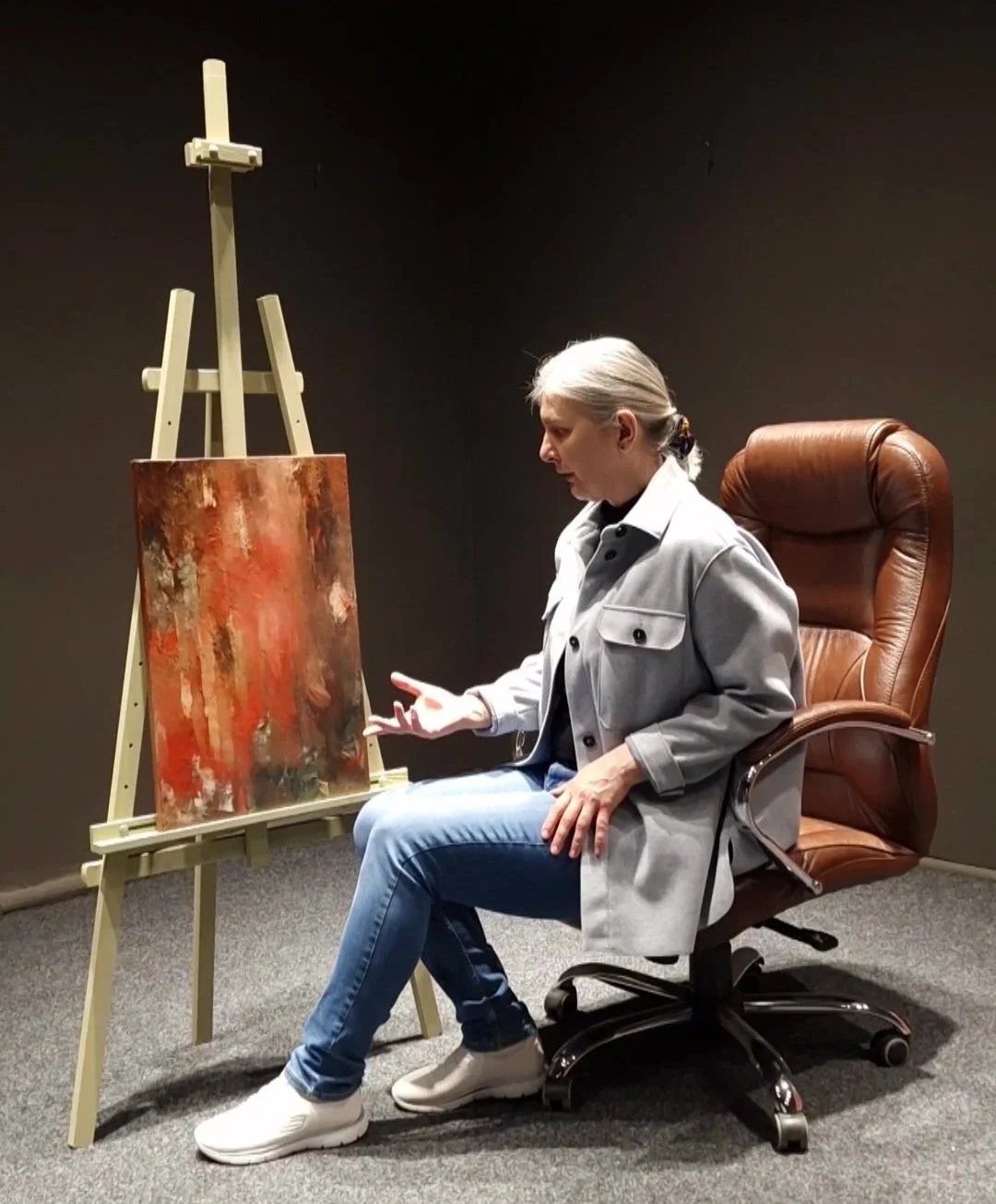
Money is returning, but not along the same paths. Collectors are moving closer to artists, galleries are becoming more disciplined, and the physical experience of art is gaining weight again.
The past five years have trained the art market to think that every new turn must be either a crisis or a return. In 2020, the market came to an abrupt halt; in 2021, it rebounded sharply; and in 2022, sales reached their post-pandemic peak. Then came the cooling period. Today, the numbers are rising again, and the easiest conclusion would be that the market is recovering. But something more significant appears to be happening. It is not returning to its previous model. It is changing the routes along which money, trust, and attention move.
It is important to distinguish between completed data and current signals. The latest full global year for which Art Basel & UBS provide comprehensive statistics is 2025. The global art market grew by 4% to $59.6 billion, following two consecutive years of decline. This is clearly a return to growth, but not a new boom: the market remains below its 2022 peak. The number of transactions increased by only 2%, to approximately 41.5 million sales, which says something important about the character of the recovery - money returned faster than activity did.
There is no single pattern within that growth either. Public auction sales rose by 9% in 2025, to $20.7 billion, while the dealer sector increased by only 2%, to $34.8 billion. Private sales by auction houses, by contrast, fell by 5%, to around $4.2 billion. This is why Art Basel & UBS use the word recalibration, rather than recovery in the sense of a return to the old system. The market is not simply regaining its former speed; it is redistributing risk, attention, and money.
Early data from 2026 reinforces that impression. According to ArtTactic, combined sales at Christie’s, Sotheby’s, and Phillips reached $6.8 billion in the first half of 2026, 70% higher than the same three houses achieved a year earlier and their strongest first-half result since 2022. London rose particularly sharply, by 131%, to $1.42 billion. But it would be misleading to conclude from this that “the global market grew by 70%.” These figures refer specifically to the three largest international auction houses and only to the first half of the year. They are a strong indicator of renewed confidence at the top end of the market, but not a complete portrait of 2026.
At the same time, money at the top is increasingly concentrating around what the market considers proven. In 2025, sales by dealers specialising in contemporary art were virtually flat, while dealers in Modern art saw sales rise by 11%, and Old Masters by 9%. Art Basel & UBS describe this directly as a structural shift toward more established artists and older sectors of the market: in periods of greater uncertainty, large sums move more easily toward names with longer histories of pricing, exhibitions, and institutional recognition. At auction, Impressionist, Modern, and Postwar art together accounted for 74% of sales value, while Contemporary accounted for 14%.
At this point, it would be easy to reach the familiar pessimistic conclusion: things are becoming harder for new artists. But this is precisely where the data begins to tell a much more interesting story.
While the top of the market is moving toward the proven, the lower and middle segments are opening more routes into the market. In the dealer sector, businesses with annual turnover below $500,000 showed the strongest growth in 2025, with average sales increasing at double-digit rates. More strikingly, among the smallest dealers, 60% of buyers in 2025 were new to their business, compared with 50% a year earlier. Across the dealer sector as a whole, 49% of buyers were new. That sits uneasily with the idea that “the market has closed and no one new can enter.” A more accurate picture is of a market becoming more cautious at the top while becoming more fragmented, mobile, and experimental below.
This is why one of the most important signals in today’s market is not happening at auction. It is happening between the artist and the collector.
In its Survey of Global Collecting, Art Basel & UBS surveyed 3,100 high-net-worth collectors across ten major markets. These are not “all collectors in the world,” and that distinction matters: the sample consists of high-net-worth individuals already active in the market. But the change within this group is too significant to ignore. 63% of respondents had purchased art directly from artists in 2024 or the first half of 2025. In 2023, that figure was 27%; in 2022, it was 43%.
And this is not simply a matter of trying direct buying once. 43% purchased directly from artists’ studios, 37% commissioned works directly, and 35% discovered work through Instagram and bought directly from the artist or through the artist’s link. Direct purchases from artists already accounted for 20% of the total value of purchases made by this group — the second-largest channel after dealers. Dealers and dealer-mediated sales, including fairs, remained in first place with 43% of spending. In other words, intermediaries have not disappeared, but their monopoly over the route from studio to collection has clearly weakened.
Even more interesting than how many collectors have tried buying directly is what they prefer. In 2025, 20% of high-net-worth collectors named buying directly from an artist as their preferred way to acquire art. A year earlier, only 6% said the same. And among people who had been active in the market for two years or less, 42% preferred buying directly from artists. This is no longer a secondary channel. For newer collectors, it is becoming one of the natural entry points into the market.
This does not mean that “galleries are no longer necessary.” The same data contradicts that conclusion. Galleries remain the leading channel by value, and 83% of surveyed HNW collectors bought through a gallery or dealer in 2024 and the first half of 2025. Art Basel & UBS also emphasise the importance of dealers in legitimising artists, building prices, shaping reputation, establishing exhibition histories, and developing long-term careers. What is changing is not the need for galleries. What is changing is the assumption that a collector must first encounter an artist through a gallery.
And perhaps the most revealing sign of this shift has very little to do with sales themselves. Among in-person art events, artist studio visits showed the strongest growth in attendance in the latest collector survey — more than exhibitions, biennials, auctions, or fairs. In August 2026, Art Basel directly linked this growth to collectors’ desire to be closer to the place where art is actually made.
There is something almost paradoxical about this after two decades of digitalisation. We expected digital channels to gradually reduce the need for physical contact. They certainly normalised buying without seeing a work in person: among collectors who bought through galleries, 51% made at least one purchase through Instagram without first seeing the work physically. Yet at the same time, fairs are growing, studio visits are increasing, and interest in the physical experience of art is strengthening. Digital channels have not replaced presence. They have become another route toward it.
Another figure confirms this. In 2025, global online-only art sales fell to $9.2 billion, their lowest level since 2019. Their share of the global market declined to 15%, down from a peak of 25% in 2020, although still above the pre-pandemic level of 9%. At the same time, art fair sales rose to 35% of dealer turnover, their highest share since 2022. The screen has not disappeared. But the market is clearly reassessing the value of what can happen only in the presence of an object, a space, and a person.
The same complexity is visible in the gallery system itself. Recent years have produced many dramatic headlines about closures, particularly in New York and London, but new analysis from Art Basel presents a more complicated picture. In New York, 36 gallery openings were recorded against 25 closures in 2024, and in 2025 there were again 36 openings against 20 closures. At the same time, galleries are moving toward shared spaces, shorter leases, pop-up projects, and collaborative booths at fairs. In September 2026, Kinsey Robb, executive director of the Art Dealers Association of America, described this not as the disappearance of the gallery model, but as a significant restructuring of it.
Her formulation may be one of the clearest descriptions of the current market: the industry is moving from an era that rewarded expansion to one that will reward discipline. Galleries are paying closer attention to where they open spaces, which fairs they attend, how much inventory they carry, where their clients are, and which actions actually produce results. This does not look much like a romantic “return of the market.” It looks more like a maturing process after a period of cheap optimism and excessive expansion.
Collectors, meanwhile, do not appear to be retreating from art. In the Art Basel & UBS survey, the average share of wealth allocated to collections by HNW collectors rose from 15% in 2024 to 20% in 2025. Among Gen Z respondents, it reached 26%. These figures need to be read carefully: they refer to affluent people already participating in the art market, not to the wealthy population as a whole. But within this active group, they suggest not withdrawal from art, but a strong willingness to continue integrating it into both capital and life.
Painting, meanwhile, hardly looks like the loser of the technological revolution. In the latest survey, it remained the largest fine-art segment by value of spending, accounting for 27% of fine-art spending in 2024. Gen Z respondents also bought painting more actively than Millennials and Gen X, even while showing the strongest interest in digital art. That distinction matters: younger collectors do not necessarily see physical and digital art as opposing choices. They simply do not assume that one has to exclude the other.
This is why the question “Has the art market returned?” now seems increasingly inadequate. Returned where? To the market of 2021, when the speed at which young names appeared could itself become a source of value? No. Large sums are now visibly more cautious about risk and increasingly drawn to established names. To a world in which every purchase followed the same sequence - “gallery, fair, collector”? Not that either. Sixty-three per cent of surveyed wealthy buyers have already made direct purchases from artists. To an entirely digital future? That did not happen either. Online-only sales are falling, fairs are recovering share, and studio visits are growing faster than other physical art events.
What is happening is more interesting than any of those scenarios. The market is becoming multi-route. A collector may discover an artist on Instagram, read their own website, visit the studio, buy directly, encounter the same artist later through a gallery, see the work at a fair, and receive further validation from a curator or institution — and none of this has to happen in one predetermined order.
For artists, that changes the question. The central question may once have been: who will represent me? Today another question has to sit beside it: what will a collector find if they reach me before representation does? Does the artist have an archive? A coherent pricing structure? Strong documentation of the work? Texts that can withstand professional scrutiny? Continuity within the practice? A way to understand where the work came from without turning the artist into a content machine? Is there a world around the work that is worth entering?
Because direct access does not mean that institutional value has stopped mattering. If anything, the opposite may be true. When the path to the artist becomes shorter, the collector needs more ways to assess trust independently: provenance, exhibitions, publications, professional descriptions, price consistency, quality of presentation, independent validation. Removing one intermediary does not eliminate the need for evidence. It moves some of the responsibility for creating that evidence closer to the artist.
And this may be the most energising part of the market today. Demand for art has not disappeared. Collectors have not disappeared. Painting has not disappeared. Galleries have not disappeared. The physical object has not lost to the screen. What is disappearing is the old certainty that there is only one correct route between a work of art and the person who may one day want to live with it.
For galleries, this means greater discipline. For collectors, greater access. For artists, greater responsibility - but also far more room to act. Perhaps the most important change in the art market today is not even that money has begun to move again. Distance is shrinking.
The distance between artist and collector. Between discovering a work and understanding where it came from. Between a digital encounter and a physical one. Between the institutional market and the many routes that were once considered peripheral.
So I would not say that the art market is returning. It is redrawing its map. And for those still waiting for the old one to come back, that may be the more important news.
