The Last Decision Before a Painting Leaves the Studio
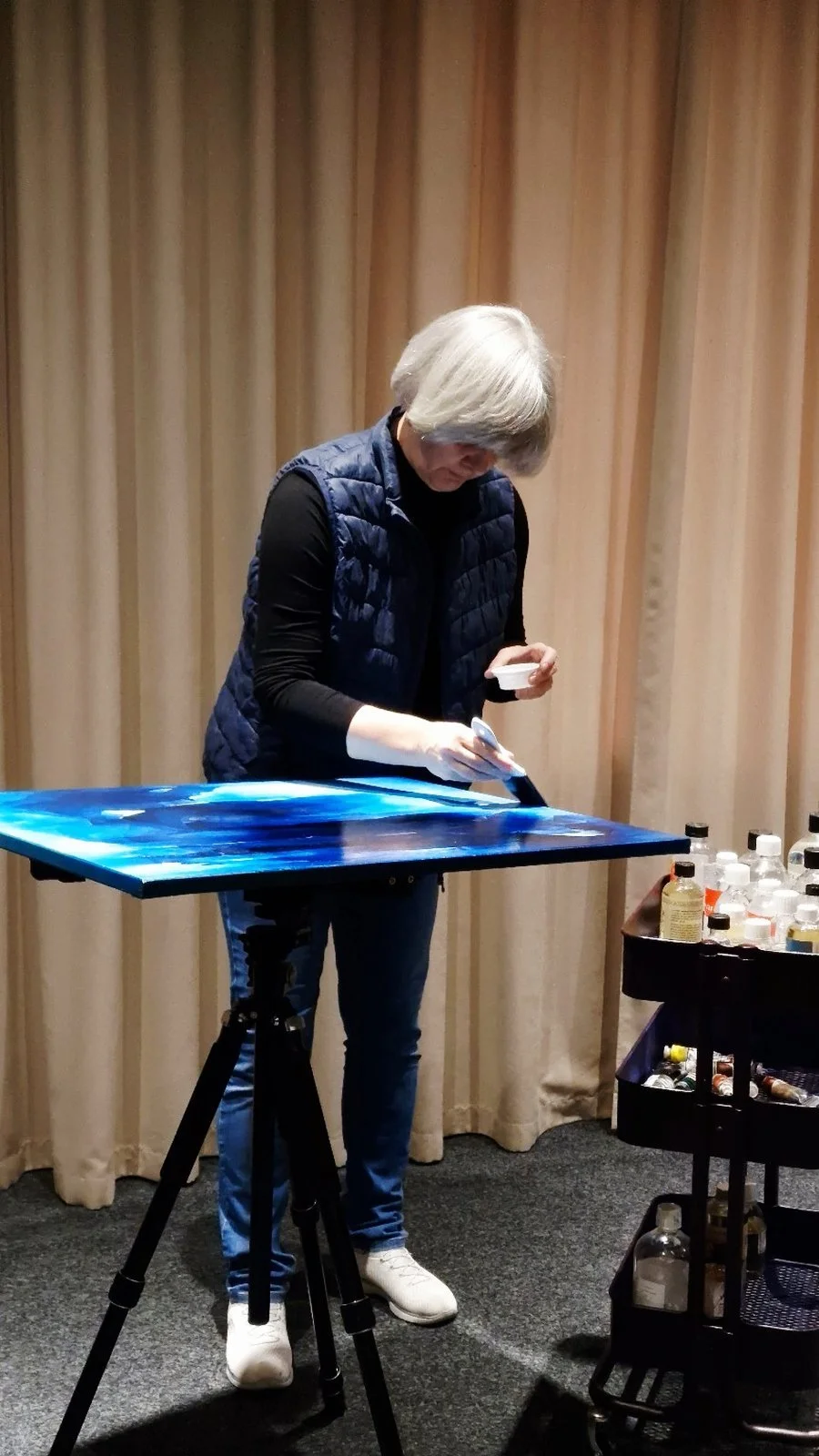
There is a moment when a painting seems finished. The composition works, the colours have found their balance, and there is nothing more I want to change with a brush. Yet one important decision still remains: how the painting's surface should look, and how it will be protected in the years ahead.
Choosing a final varnish is something I take seriously. Before applying anything, I consider when the painting was made, which materials I used, and whether the paint layers have dried sufficiently for the particular varnish. Some paintings need considerably more time than others. A painting may be visually complete long before it is ready for its final protective coating.
Then comes the question of appearance.
A gloss finish can bring extraordinary depth to dark colours and make subtle differences between shades more visible. A matte surface absorbs attention differently, reducing reflections and giving the painting a quieter presence. Satin sits somewhere between the two, retaining some richness without the pronounced shine.
These differences can be surprisingly significant. The same painting may feel quite different under each finish. A deep blue can appear almost endless beneath a glossy surface, while a matte finish may soften its intensity and reveal a different aspect of the composition.
I don't believe every painting should have the same finish. I look at the colours, the texture, the way light moves across the surface, and how I want the work to be experienced in a room. Sometimes the right decision is immediately obvious. Sometimes it takes longer.
There is also a responsibility that extends far beyond appearance. A painting may eventually belong to someone I will never meet, hang in a home on another continent, or pass from one generation to another. The materials I choose today will influence how well it can be cared for in the future.
That is why I pay attention to the protective properties of a varnish, its ageing characteristics, and whether a conservator could remove it safely if necessary. A well-chosen varnish cannot guarantee that a painting will last forever, but it can be an important part of caring for it.
For someone looking at a finished painting, the varnish may be almost invisible. And perhaps that is exactly as it should be.
What matters is that the surface feels right, the colours are seen as I intended, and the painting is given the best possible chance to remain that way for many years.
