What Happens to a Painting Over Time?
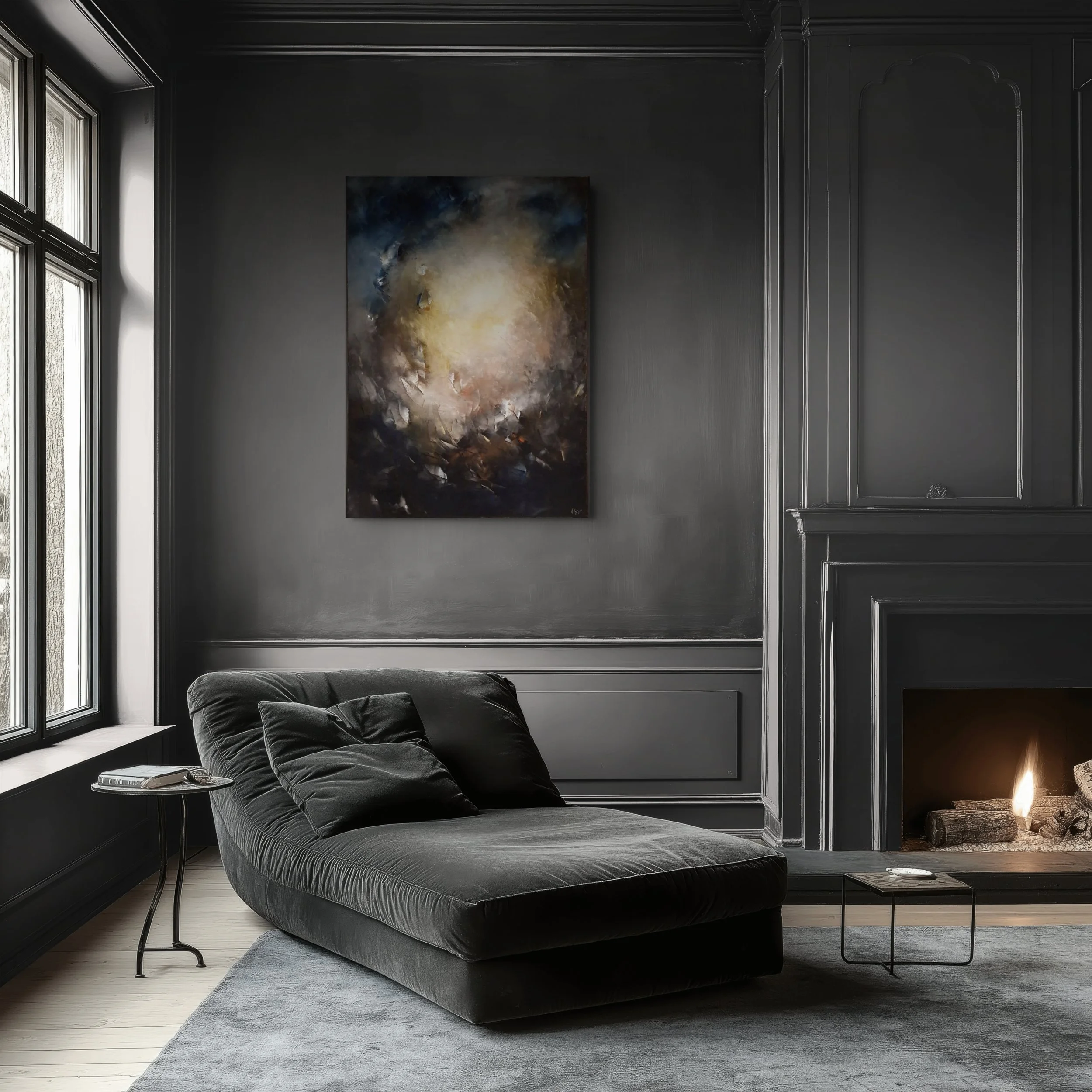
When we buy a painting, it feels complete.
The artist has applied the final brushstroke, signed the canvas, and the work has found its place on a wall. It seems as though nothing more will happen.
In reality, that is when a painting begins its second life.
Many people are surprised to learn that an oil painting is not a static object. It continues to mature long after it leaves the artist's studio. Light interacts with its surface every day. The surrounding environment slowly influences its materials. Even the changing daylight in your home becomes part of the painting's story.
Yet the most important changes happen beneath the surface.
A well-made painting often develops greater visual richness over time. Transparent glazes become more luminous, subtle colour relationships grow increasingly complex, and light begins to travel through the layers in ways that are impossible to fully appreciate when the work is newly finished. This is one of the reasons many historical paintings possess such extraordinary depth today.
But this is not true of every painting.
Two works may look almost identical on the day they are purchased. Both may appear vibrant, beautifully finished, and equally impressive. Yet decades later, they can be remarkably different.
One will retain the depth of its colours, the integrity of its paint surface, and the sense of light that seems to come from within.
The other may gradually lose brilliance. Certain pigments can fade. Colours may shift. The surface may yellow or become more fragile, and in some cases, cracks begin to appear.
The remarkable part is that these differences often began long before the painting was ever hung on a wall.
They begin with the materials.
Every pigment ages differently. Every ground supports paint in its own way. Every layer contributes to how the painting will respond to time. That is why professional artists often devote as much attention to the materials beneath the image as to the image itself.
For a collector, this means something profoundly simple.
When you purchase an original painting, you are not only acquiring what you see today. You are becoming the temporary guardian of something intended to outlive both trends and seasons.
One day, it may hang in another home. It may be passed on to your children or grandchildren. It may become part of a family's history without anyone remembering the exact moment it first entered the room.
That is why longevity is not merely a technical concern.
It is part of the artwork's value.
A painting is not created only for the present moment.
The finest ones are created with time itself in mind.
And in the end, time is the most honest critic any painting will ever have.
