Oil on cotton canvas · 120 × 120 cm · 2023
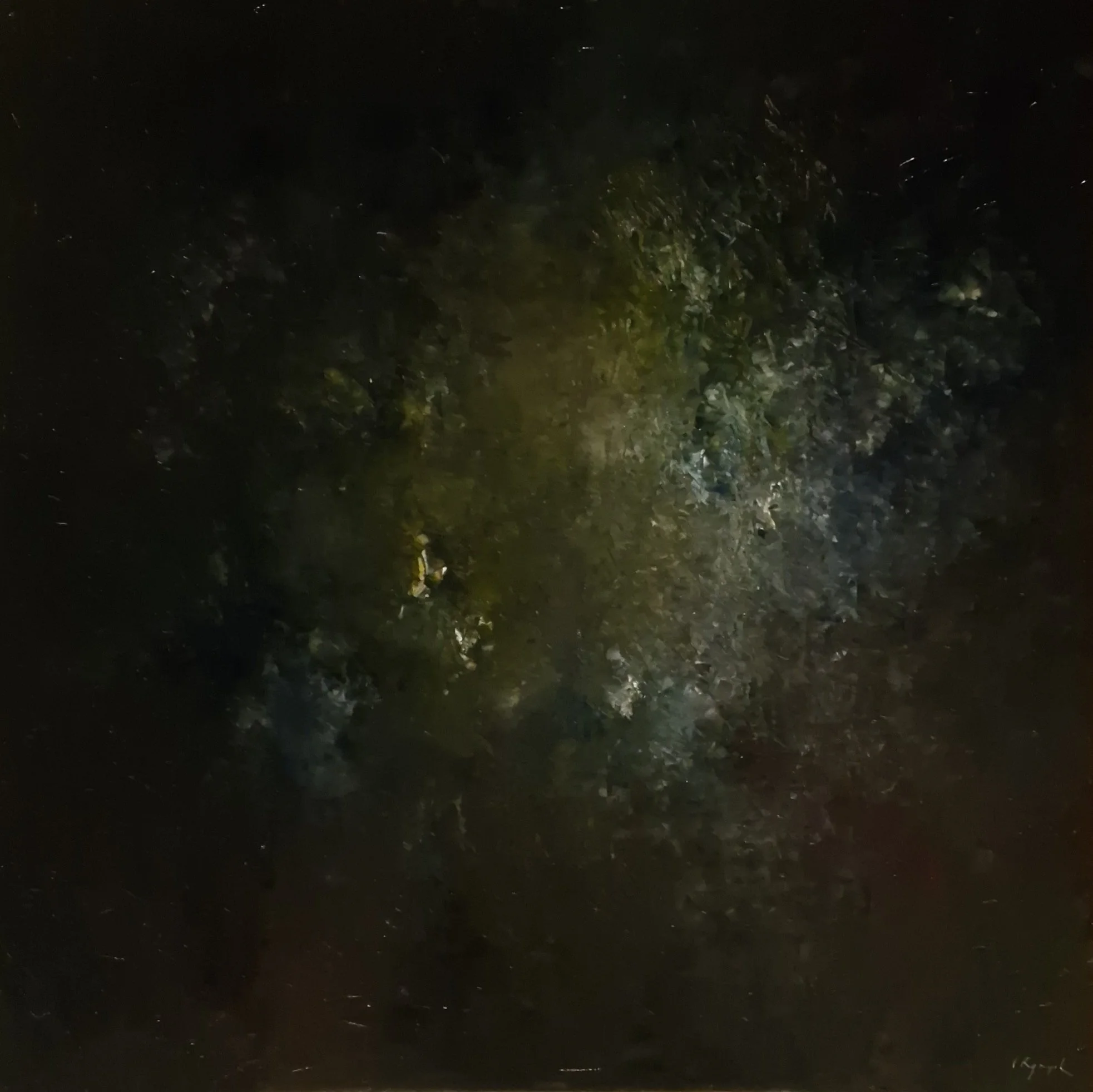
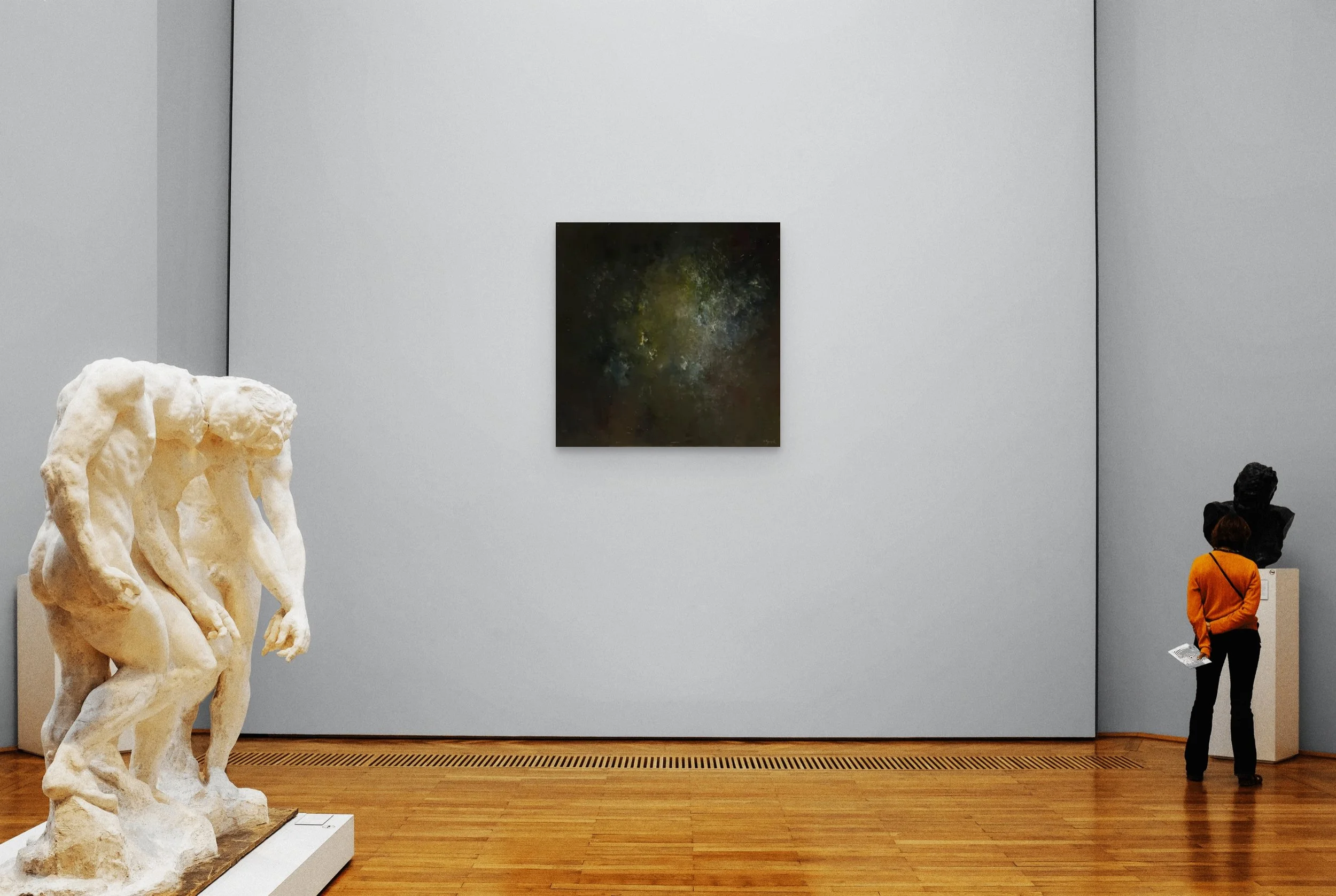
Embers of Resilience was created in 2021 in response to the wildfires in Turkey. The work does not document the moment of catastrophe itself, nor does it attempt to reproduce it literally. Its attention is directed toward what remains after extreme impact: residual heat, an altered environment, damaged matter, and a structure that continues to exist even though it can no longer return to its previous state.
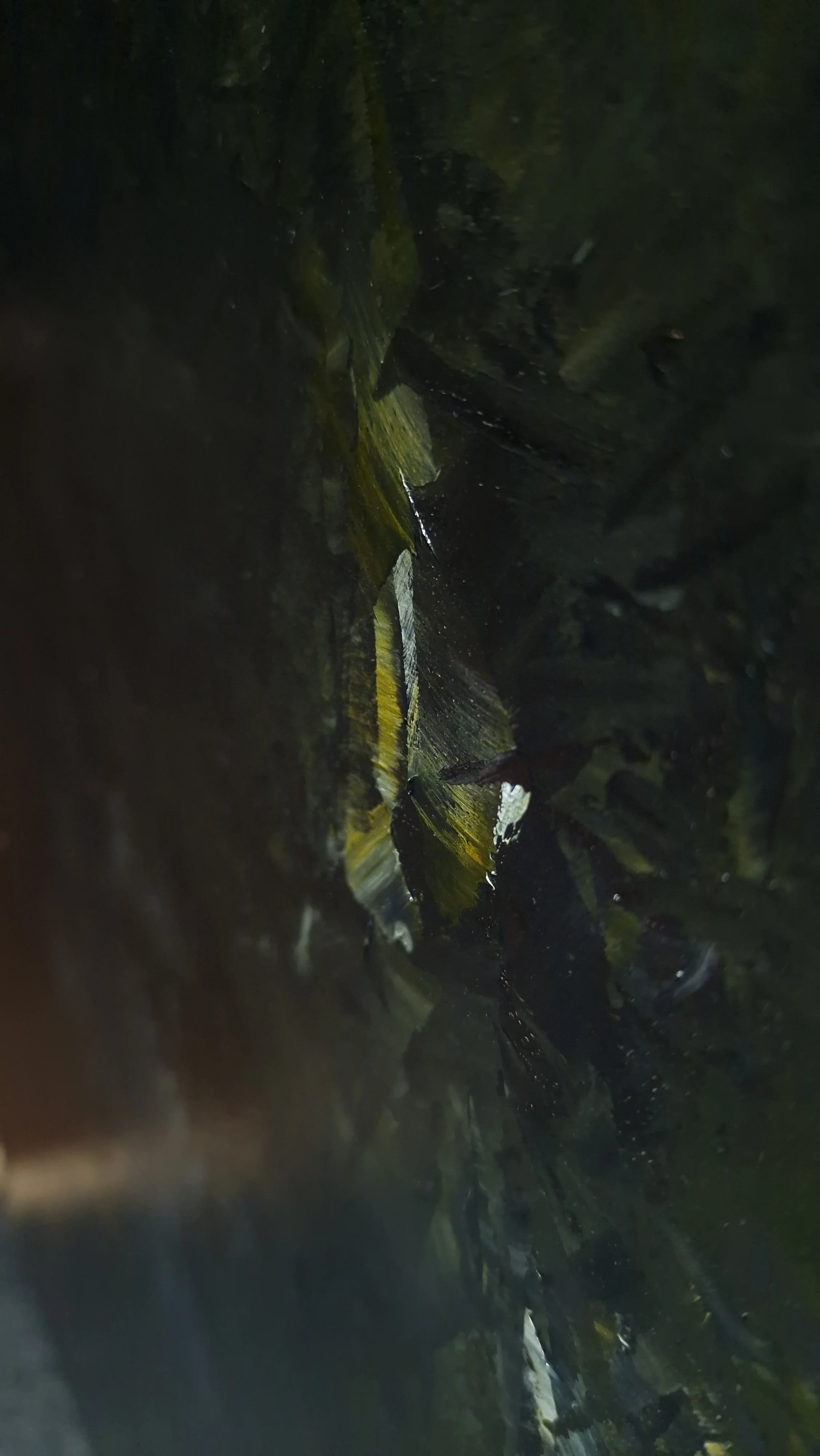
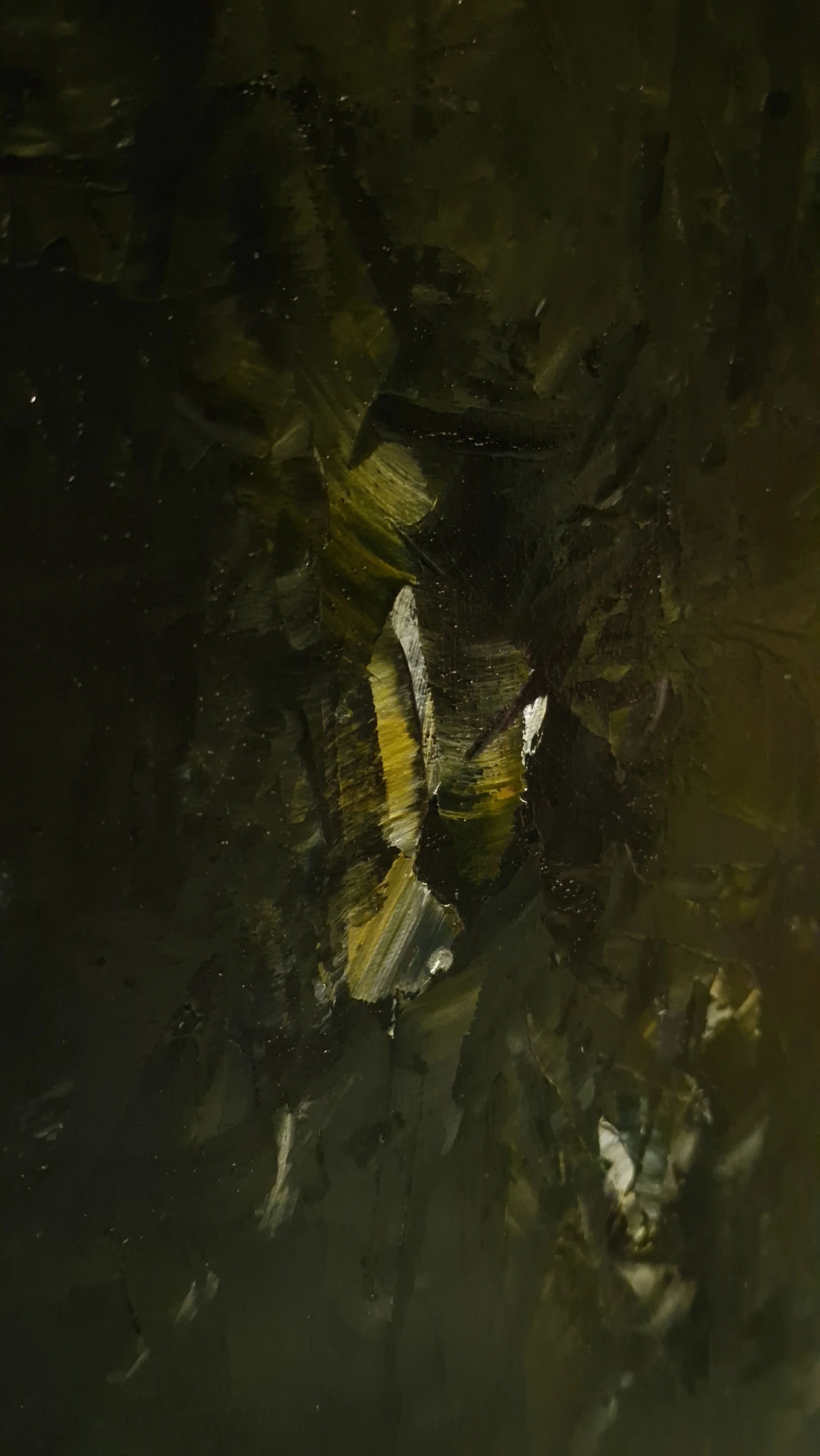
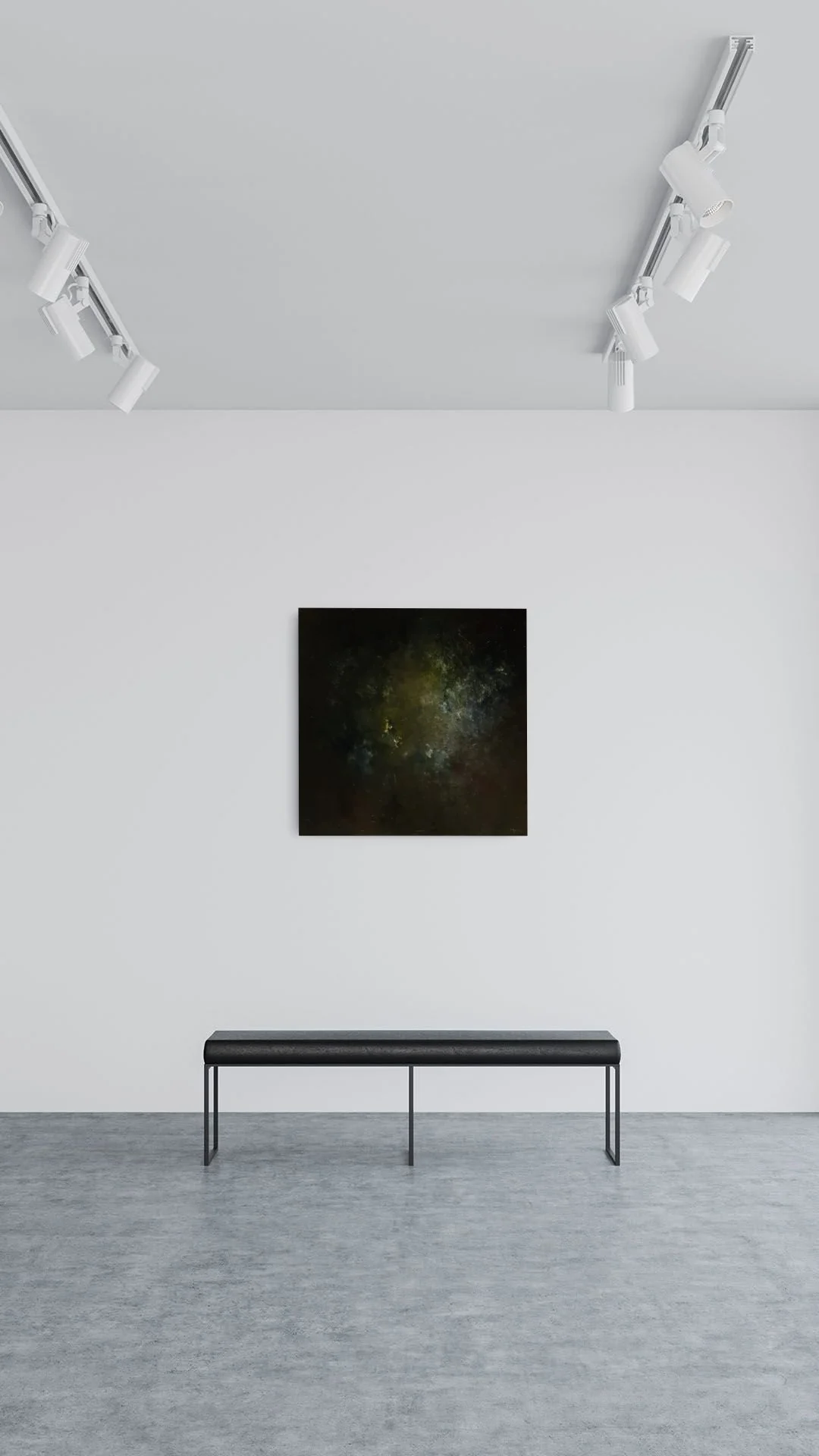
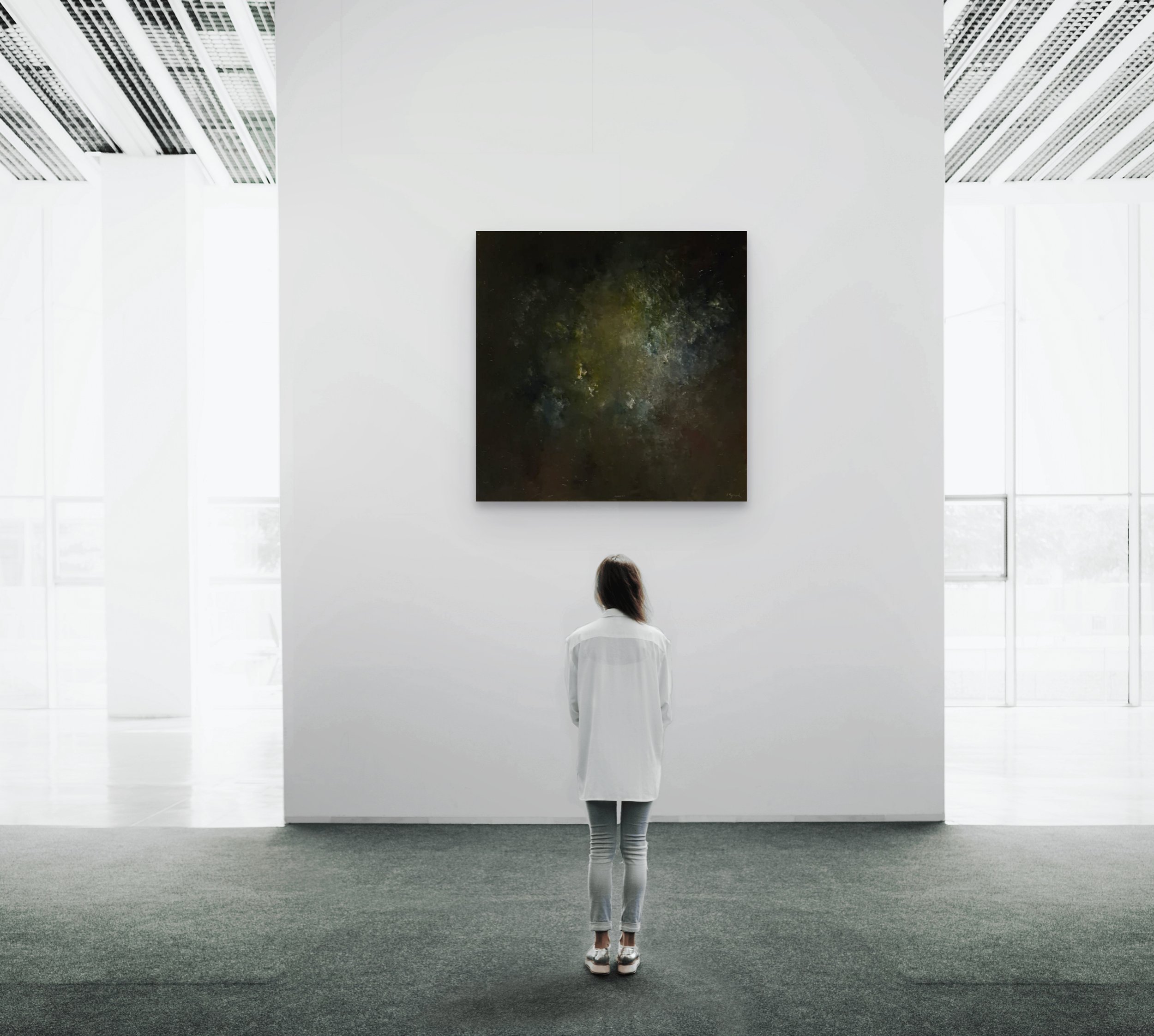
Within the painting, colour and density operate like different stages of the same process. The yellow field at the top retains a sense of heat and open space; the dark masses below and to the right hold the weight of what has already happened. Between them, fragments emerge that may suggest a scorched surface, a fracture, a landscape, or the remnants of an unknown structure. They never resolve into a single image. The event has passed, but its trace remains active.
For this reason, the title Embers of Resilience carries a more complex meaning today than the literal idea of endurance after catastrophe. The “embers” refer less to the fire itself than to what continues to hold energy after it has passed. Resilience, in turn, becomes the capacity to continue after a change that can no longer be fully undone.
In the years since the painting was made, the language we use to speak about climate disasters has also changed. It has become increasingly difficult to describe them through the familiar sequence of destruction, recovery, and a return to normal. Scientific and climate discourse now gives greater attention to limits to adaptation, loss and damage, critical thresholds, and changes that may persist for decades or become irreversible. The IPCC has explicitly noted that some ecosystems have already reached hard limits to adaptation, and that once certain thresholds are crossed, systems may remain in altered states even after the original pressure has diminished. UNEP, in turn, uses the term loss and damage for consequences of the climate crisis that remain unavoidable or irreversible even when adaptation and mitigation measures are in place.
Against this background, Embers of Resilience reads more sharply today than it did in 2021. The question is no longer only whether nature can recover after fire. A more difficult question emerges: what do we mean by recovery when the original state can no longer be restored? Can resilience mean not a return to what existed before, but the ability to continue within changed conditions?
The frame of the painting therefore expands from the specific wildfires in Turkey toward a more fundamental problem of the contemporary world: how life continues after irreversible change. Recovery here is no longer a promise of return. It becomes a process of adapting to a reality in which the trace of the event remains part of what follows.
This is why the work belongs within Memory and Time. Memory here does not function as a reconstruction of the past, but as the change that the past leaves within the present. Time does not erase the event or return matter to its original state. It reveals what has endured, what has been altered permanently, and what continues to act years later.
In this sense, Embers of Resilience speaks not only about fire, and not only about resilience. It asks a more difficult question: how does life continue once the possibility of complete return has disappeared?
Oil on cotton canvas · 120 × 120 cm · 2023
Embers of Resilience was created in 2021 in response to the wildfires in Turkey. The work does not document the moment of catastrophe itself, nor does it attempt to reproduce it literally. Its attention is directed toward what remains after extreme impact: residual heat, an altered environment, damaged matter, and a structure that continues to exist even though it can no longer return to its previous state.
Within the painting, colour and density operate like different stages of the same process. The yellow field at the top retains a sense of heat and open space; the dark masses below and to the right hold the weight of what has already happened. Between them, fragments emerge that may suggest a scorched surface, a fracture, a landscape, or the remnants of an unknown structure. They never resolve into a single image. The event has passed, but its trace remains active.
For this reason, the title Embers of Resilience carries a more complex meaning today than the literal idea of endurance after catastrophe. The “embers” refer less to the fire itself than to what continues to hold energy after it has passed. Resilience, in turn, becomes the capacity to continue after a change that can no longer be fully undone.
In the years since the painting was made, the language we use to speak about climate disasters has also changed. It has become increasingly difficult to describe them through the familiar sequence of destruction, recovery, and a return to normal. Scientific and climate discourse now gives greater attention to limits to adaptation, loss and damage, critical thresholds, and changes that may persist for decades or become irreversible. The IPCC has explicitly noted that some ecosystems have already reached hard limits to adaptation, and that once certain thresholds are crossed, systems may remain in altered states even after the original pressure has diminished. UNEP, in turn, uses the term loss and damage for consequences of the climate crisis that remain unavoidable or irreversible even when adaptation and mitigation measures are in place.
Against this background, Embers of Resilience reads more sharply today than it did in 2021. The question is no longer only whether nature can recover after fire. A more difficult question emerges: what do we mean by recovery when the original state can no longer be restored? Can resilience mean not a return to what existed before, but the ability to continue within changed conditions?
The frame of the painting therefore expands from the specific wildfires in Turkey toward a more fundamental problem of the contemporary world: how life continues after irreversible change. Recovery here is no longer a promise of return. It becomes a process of adapting to a reality in which the trace of the event remains part of what follows.
This is why the work belongs within Memory and Time. Memory here does not function as a reconstruction of the past, but as the change that the past leaves within the present. Time does not erase the event or return matter to its original state. It reveals what has endured, what has been altered permanently, and what continues to act years later.
In this sense, Embers of Resilience speaks not only about fire, and not only about resilience. It asks a more difficult question: how does life continue once the possibility of complete return has disappeared?
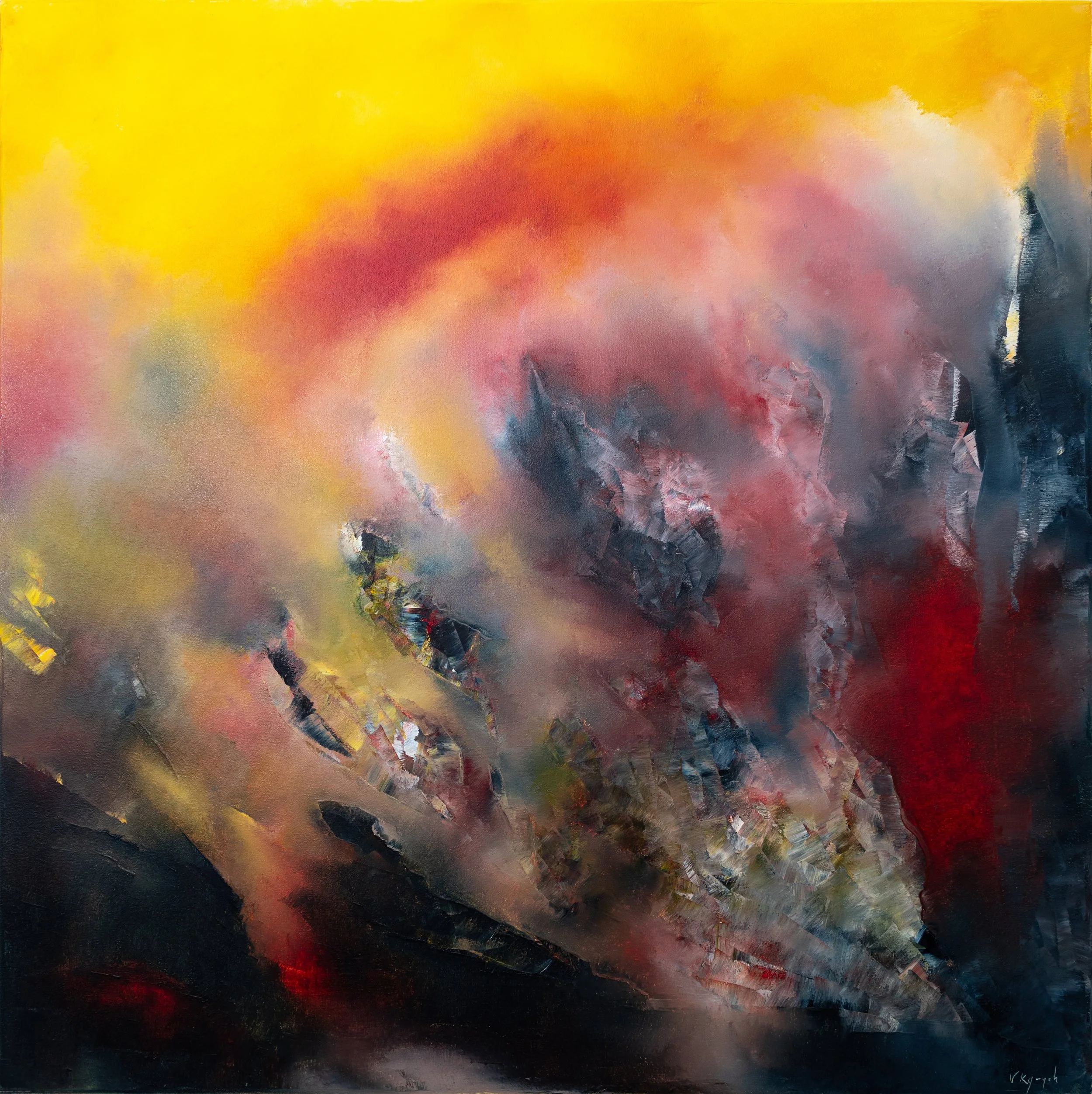 Image 1 of 6
 Image 2 of 6
 Image 3 of 6
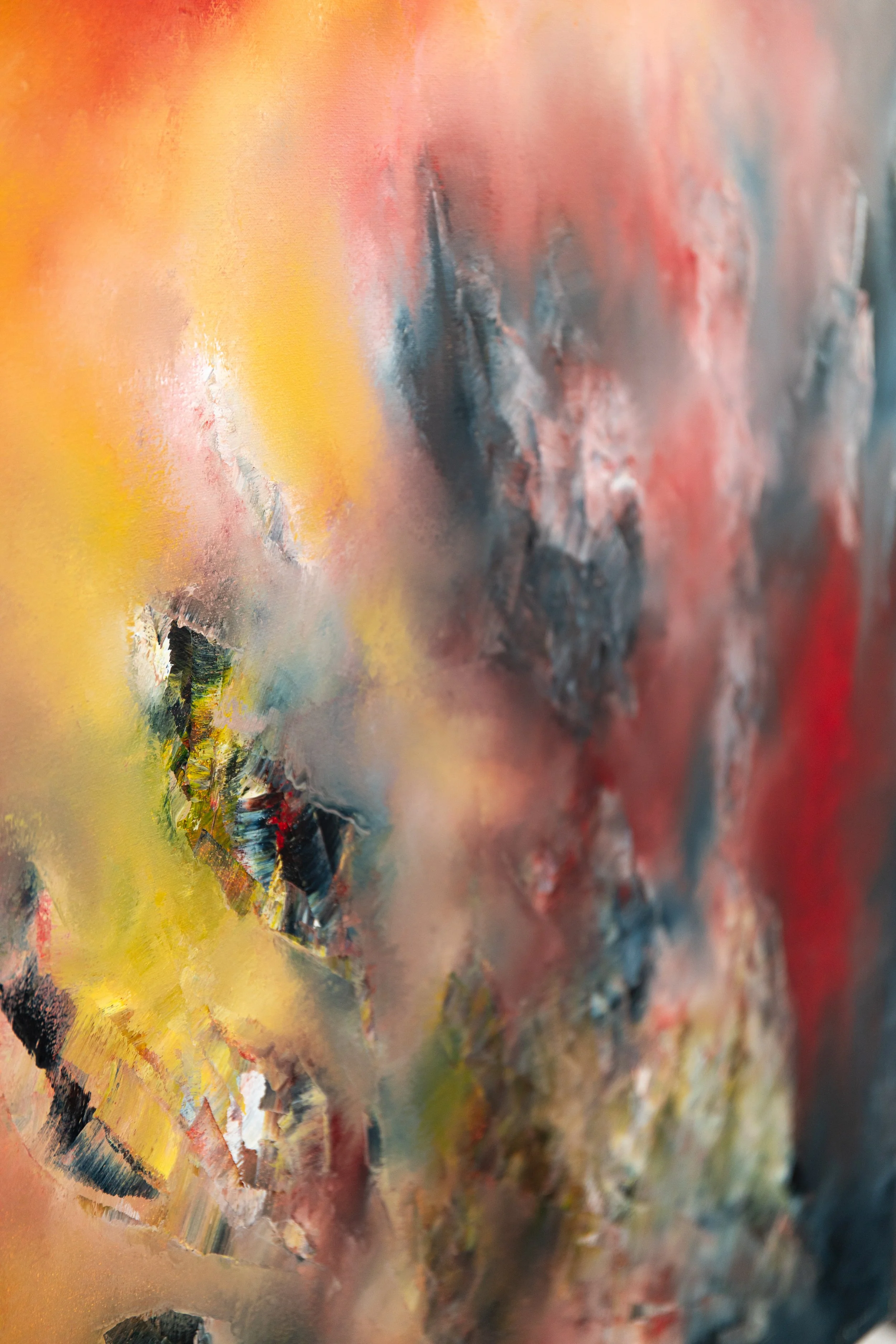 Image 4 of 6
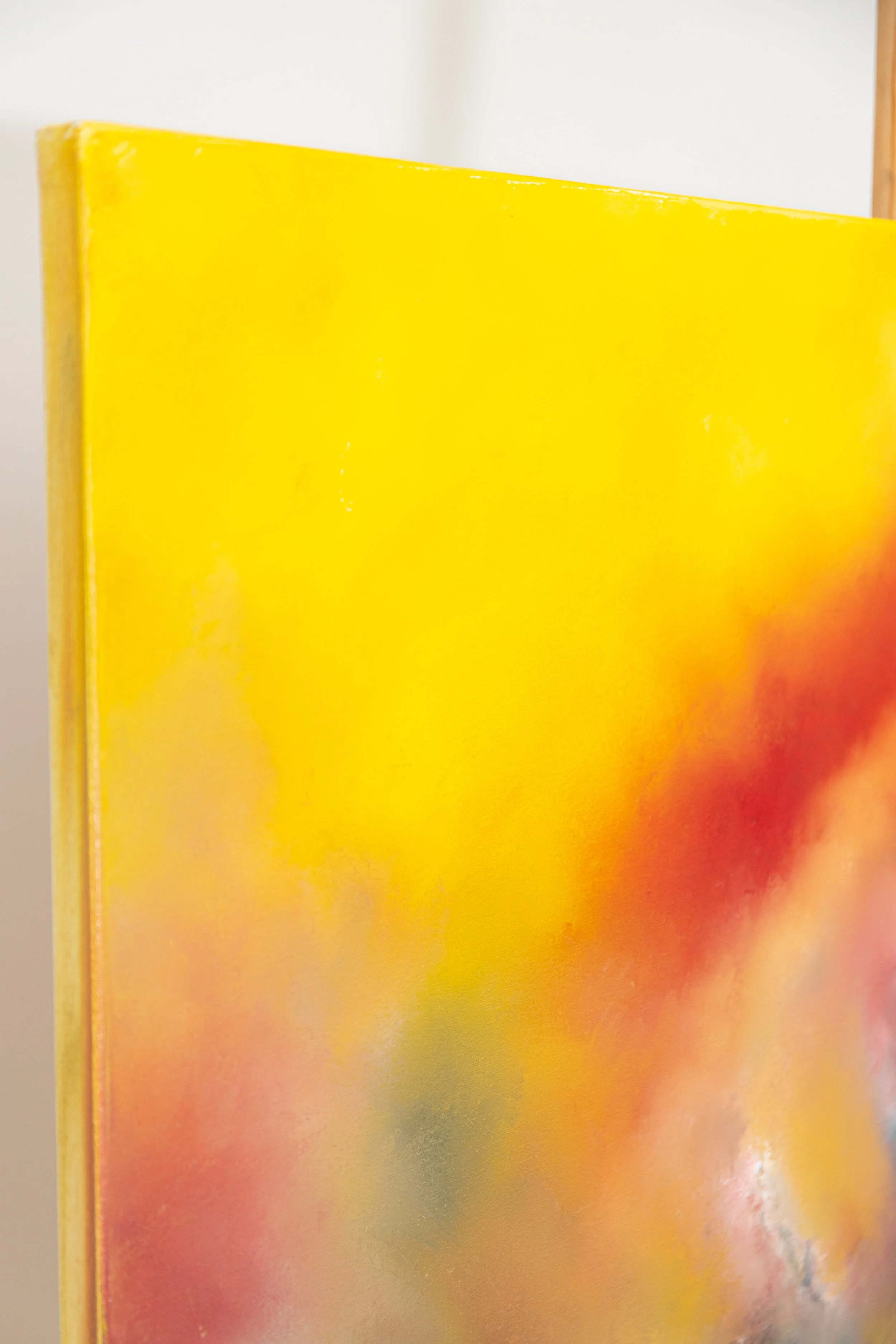 Image 5 of 6
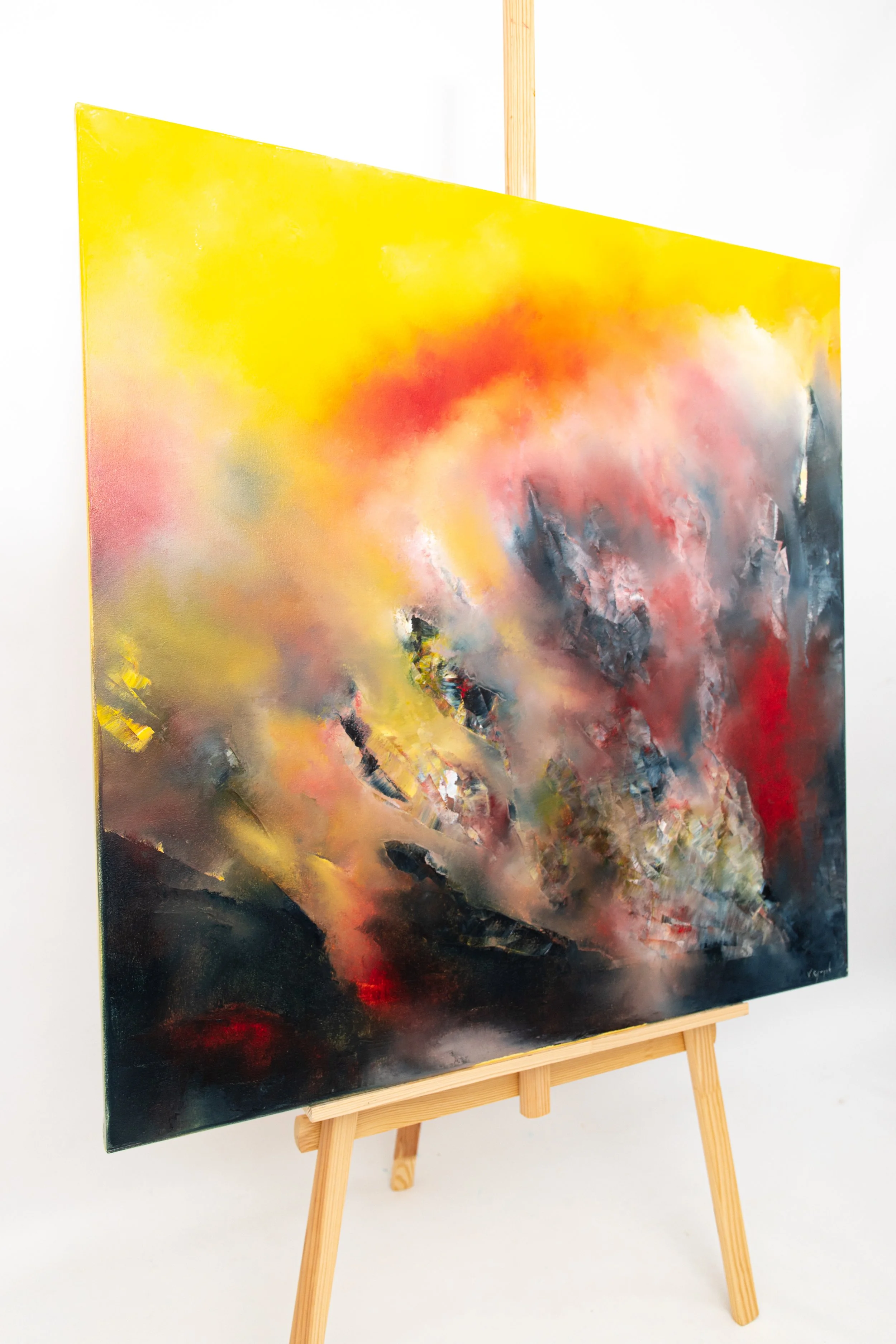 Image 6 of 6