Black - The Colour That Asks Nothing for Itself
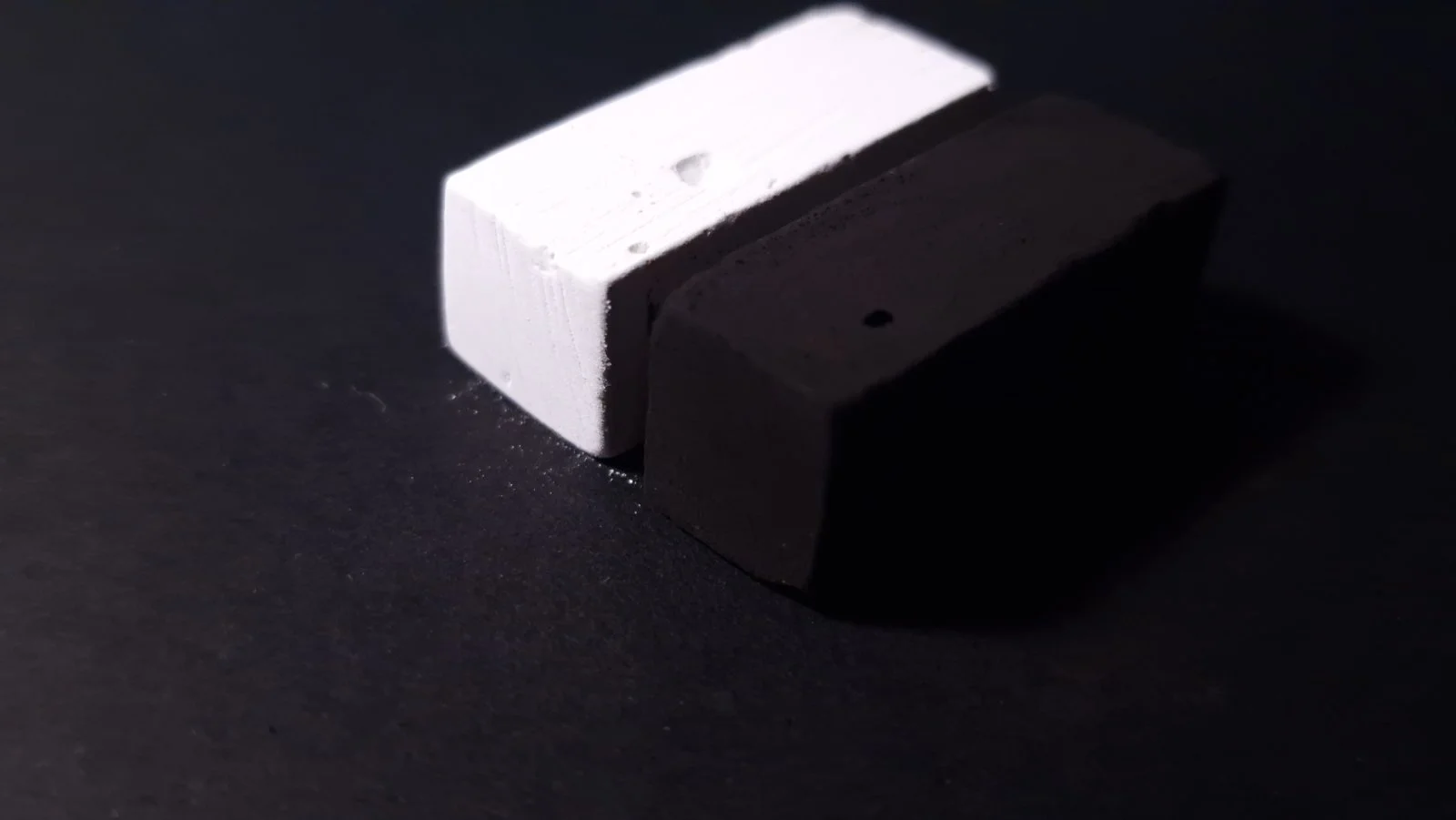
Thousands of texts have been written about black. It has been called the colour of elegance, power, mourning, luxury, mystery, and emptiness. Every era has found its own meaning in it, as though black were a mirror reflecting its fears, its hopes, and its ideas of beauty. Yet perhaps all these definitions share one common flaw: they try to explain black itself while paying remarkably little attention to what it actually does.
We tend to think of colours as independent statements. Red cannot be mistaken for anything else. Blue carries its own sense of space. Yellow announces itself instantly. Every colour seems to enter a painting with an identity already formed, demanding to be seen and heard.
Black behaves differently.
It may be the only colour whose greatest strength lies not in speaking about itself. It scarcely changes its own nature. Instead, it changes the meaning of everything around it.
Next to black, white appears purer. Red gains depth. Metal feels colder. Wood becomes warmer. Stone seems heavier. The objects themselves do not change, nor do the colours. What changes is the system of relationships between them. And with it, our perception changes as well.
The shift is almost imperceptible, yet this is where one of black's rarest qualities resides. It has no desire to become the protagonist of a work of art. Instead, it does something far more complex: it creates the conditions in which everything else becomes more expressive. Its presence does not compete with form, material, or colour. It allows each of them to reveal its own voice.
Perhaps this is why our familiar definitions always prove insufficient. We call black elegant, although elegance does not exist within the colour itself but emerges through the relationships it creates. We describe it as dramatic, although drama arises not from black alone but from the way it transforms the space around it. Again and again, we mistake consequences for causes.
This is also why black cannot be understood in isolation. It almost never exists for itself. Its nature is revealed only through interaction. It may be the only colour that does not aspire to be the most expressive. Instead, it makes everything around it more expressive.
In art, we often associate strength with the ability to command attention. Yet there is another kind of strength - one that is almost invisible. It does not ask to be noticed. It does not dominate. It does not suppress. It reshapes a space with such precision that everything within it begins to be perceived differently. We rarely notice this kind of strength itself. What we notice is how much more convincing the world becomes in its presence.
Perhaps that is why black returns to art again and again - not as a symbol, not as a style, not as an aesthetic preference.
But as a reminder that the highest form of expression may not lie in speaking louder than everyone else.
It may lie in allowing everything else to speak in its fullest voice.
