Some Paintings Are Not Meant for First Impressions
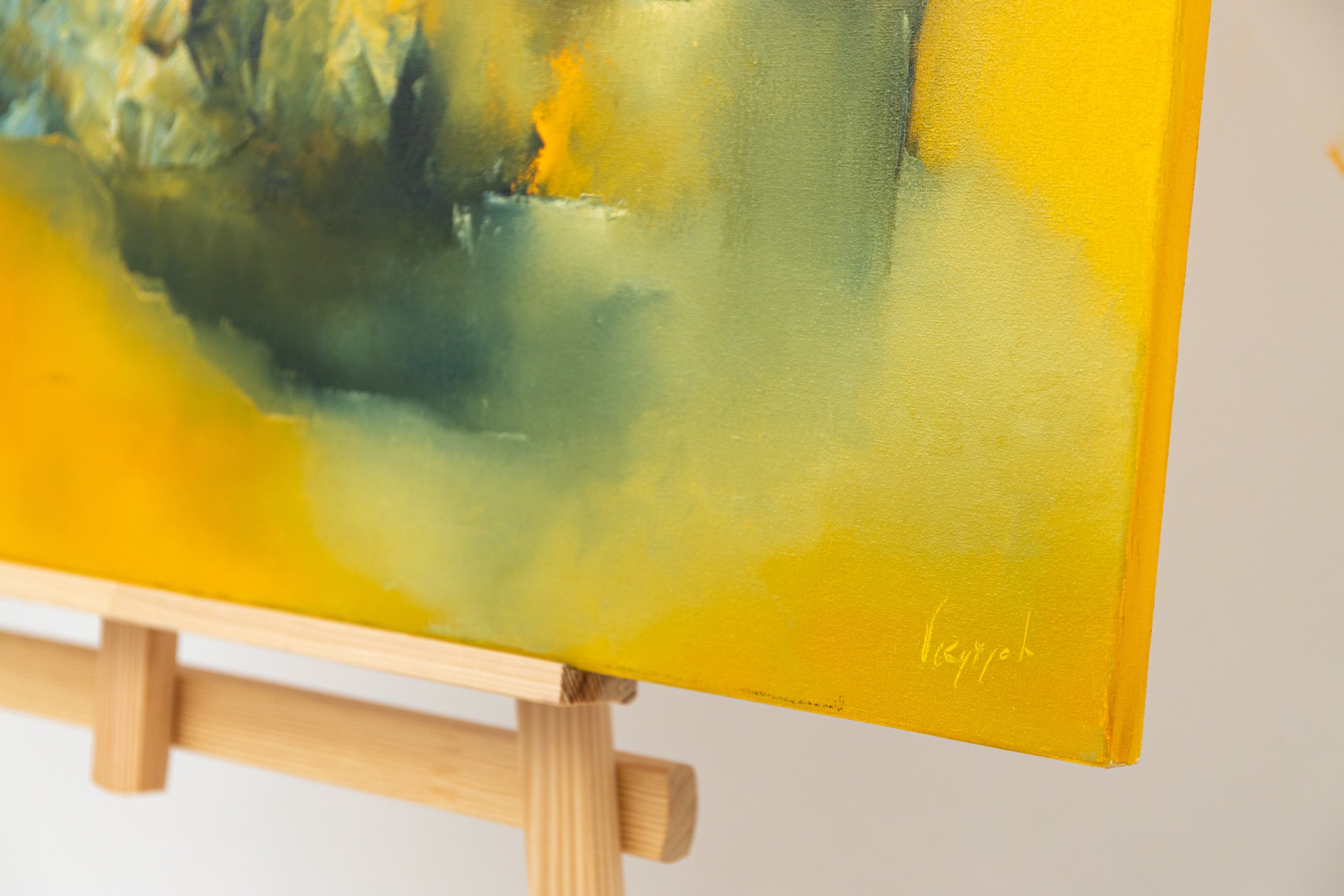
We rarely stop to consider that not all paintings exist within the same experience of time. Some works of art are designed to make an immediate impression. They capture our attention through dramatic colour, striking composition, an unexpected subject, or extraordinary technical skill. There is nothing wrong with that. Some paintings are meant to be encountered in precisely this way.
But there is another kind of painting.
These works cannot be fully seen during a first meeting. Not because they are difficult or obscure, but because they never attempt to reveal everything at once. They unfold gradually, allowing their meaning to emerge over time rather than within the first few seconds.
Living with such a painting is a very different experience. What once seemed almost insignificant may quietly become the part of the work you return to most often. A colour that initially felt restrained begins to define the atmosphere of an entire room. A passage of light across the painted surface catches your attention differently as the seasons change. Details that once escaped your notice gradually become impossible to overlook. The painting itself has not changed. The relationship between you and the painting has.
This is why first impressions can be surprisingly unreliable when choosing a work of art. They tell us what is capable of attracting our attention, but they reveal very little about what is capable of sustaining it. The paintings that remain meaningful over many years rarely depend on novelty alone. They continue to offer something because they are never exhausted by a single encounter.
Perhaps our instinct to trust first impressions has become even stronger today because so much of contemporary visual culture depends on immediate impact. Photographs, advertisements, social media, and digital interfaces all compete for a few brief seconds of attention. In that environment, we begin to expect everything to reveal itself instantly.
Painting has never truly belonged to that world.
The finest paintings do not compete for your first impression. They quietly earn your second, your tenth, and eventually your hundredth. Their depth is not hidden as a puzzle to be solved. It simply cannot be experienced all at once because it was never created all at once.
When choosing a painting, it may be worth asking a different question. Instead of wondering how strongly it moves you today, ask whether it feels capable of continuing the conversation years from now. The future of a painting is not determined only by its condition or its place in art history. It also exists in the possibility that, long after the excitement of a first encounter has faded, the work will still have something new to show you.
Perhaps this is one of the rarest qualities of truly exceptional painting. Some works gradually come to an end the more we look at them. Others seem to begin only after we have lived with them for years. Those are often the paintings that stay with us for a lifetime.
