A Material Can Be Replaced. But Can a Form?
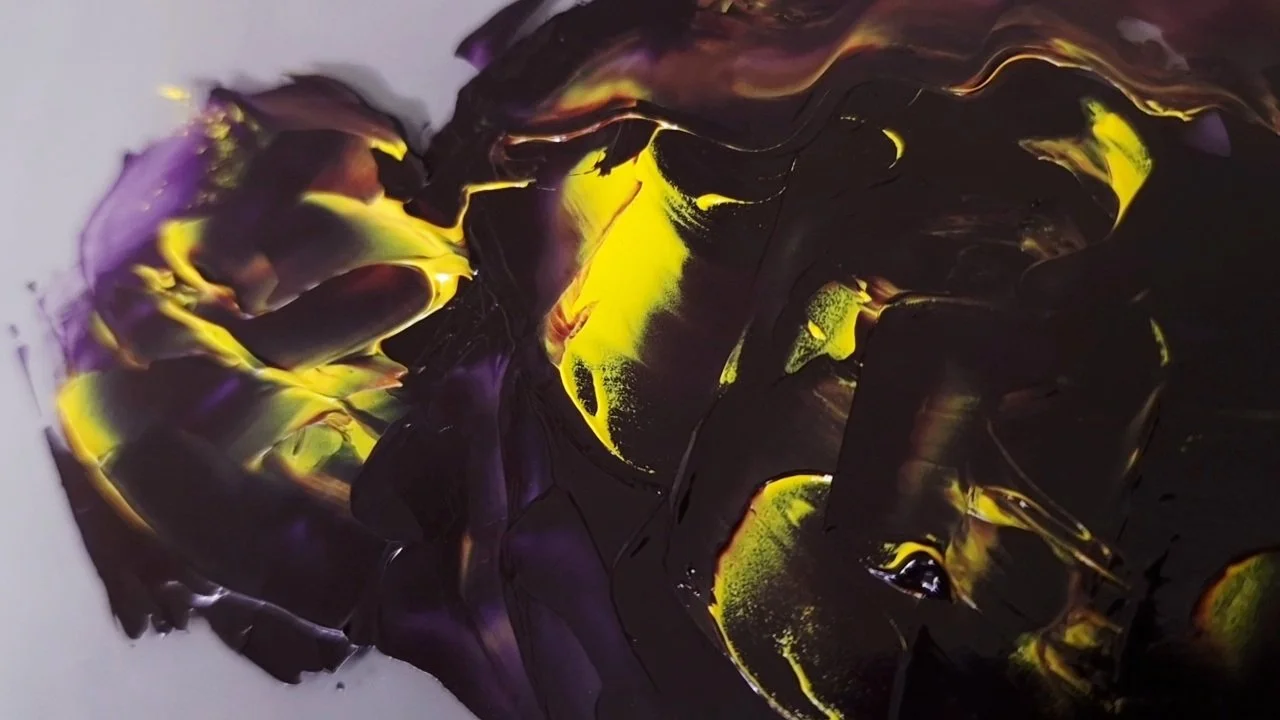
When an artists’ material disappears from production, the conversation usually turns quickly to substitution. Which modern pigment will produce a similar colour? Which medium has comparable properties? Which ground can be used in place of one that has been discontinued? These are reasonable questions. But they already contain an assumption that is rarely made explicit: if the new material is sufficiently similar to the old one in function or visual result, then the artistic loss is minimal.
Almost a century ago, the French art historian Henri Focillon proposed a more rigorous way of thinking about the relationship between a work of art and its material. In Vie des formes - The Life of Forms in Art - he challenged the idea of material as a passive vehicle for a pre-existing artistic idea. Stone, wood, bronze, paper, or paint, for Focillon, possess their own physical characteristics: density, texture, resistance, weight, and particular ways of interacting with light. They enable certain actions and constrain others. The artist acts upon the material, but the material simultaneously acts upon the process through which the work is made.
A fairly concrete consequence follows from this. The same image executed in charcoal, red chalk, ink, or graphite is not simply one image rendered in four technical versions. A change of material alters the density of the surface, the character of the line, its interaction with light, and ultimately the form of the work itself. This was precisely what Focillon drew attention to.
Today, this proposition has acquired an unexpectedly practical relevance. The contemporary system of artists’ materials continually produces substitutions. Pigments disappear or become restricted. Formulations change. Production ceases. One binder is replaced by another. A natural material gives way to a synthetic alternative. Sometimes the new version is genuinely technically superior: more stable, safer, less expensive, or easier to manufacture.
But technical equivalence does not necessarily mean artistic equivalence. Two materials may produce a similar colour yet behave very differently in mixtures. They may have comparable viscosity but respond differently under the brush. They may offer similar durability while forming very different surfaces. Even relatively small differences in transparency, drying rate, flow, particle size, or the ability to retain the trace of a tool can gradually alter the sequence of an artist’s actions. And the sequence of actions matters.
For Focillon, technique was not a set of instructions but a process through which form is discovered in the act of making. A brush, a burin, or a pencil is not a neutral channel between the artist’s intention and the work: the tool alters what the hand can do and participates in the emergence of the result.
This allows us to ask a more contemporary question. What exactly do we consider to have been preserved when a material has been successfully replaced? Its chemical composition? Its function? Its visual effect? The ability to perform a particular operation? Or the range of decisions that the material once made available to the artist? These are not the same thing.
This is one of the areas of investigation within the Material Memory Project (MMP). The project considers an artists’ material not only as a substance that can be identified, catalogued, or replaced, but as part of a working system: material — tool — action — skill — artistic decision.
When one element of this system disappears, the loss may not occur immediately and may remain almost invisible. Paintings continue to be made. A colour bearing a similar name remains in the catalogue. A manufacturer offers a substitute. On the surface, visual culture appears to have lost nothing. But a particular way of working may gradually disappear. And with it, the decisions for which that way of working was once natural.
It is important not to romanticise old materials here. A historical material is not valuable simply because it is old, rare, or natural. Many modern substitutes are considerably safer and more stable. Some earlier technologies are indeed better left in the past.
The research question is narrower, and for that reason more interesting: are we able to document the artistic consequences of substitution before the practical experience required to make the comparison disappears?
As long as the original material still exists, and there are people who have worked with it, differences can be observed, described, and tested. One or two generations later, samples, chemical analyses, manufacturers’ catalogues, and finished works may remain. But something else may have disappeared: knowledge of how the material behaved in the process of making — how much could be removed, how well it retained a mark, how it changed in mixtures, what happened under a particular pressure of the brush, and which decisions an artist made precisely because the material responded in a particular way.
Focillon argued that a work of art cannot be understood exclusively through what it “means.” We must also see how it exists — through material, space, technique, and action.
Today, we can add another question: what conditions must exist for a particular form to be possible in the first place?
The Material Memory Project begins precisely here. Not with an attempt to preserve everything. And not with nostalgia for vanished paints. But with the need to distinguish between two things that the art materials industry too often treats as equivalent: a material that can be replaced - and an artistic possibility that can be lost.
