The History of Pigments Is Usually Written as a History of Arrivals. What If We Recorded the Departures?
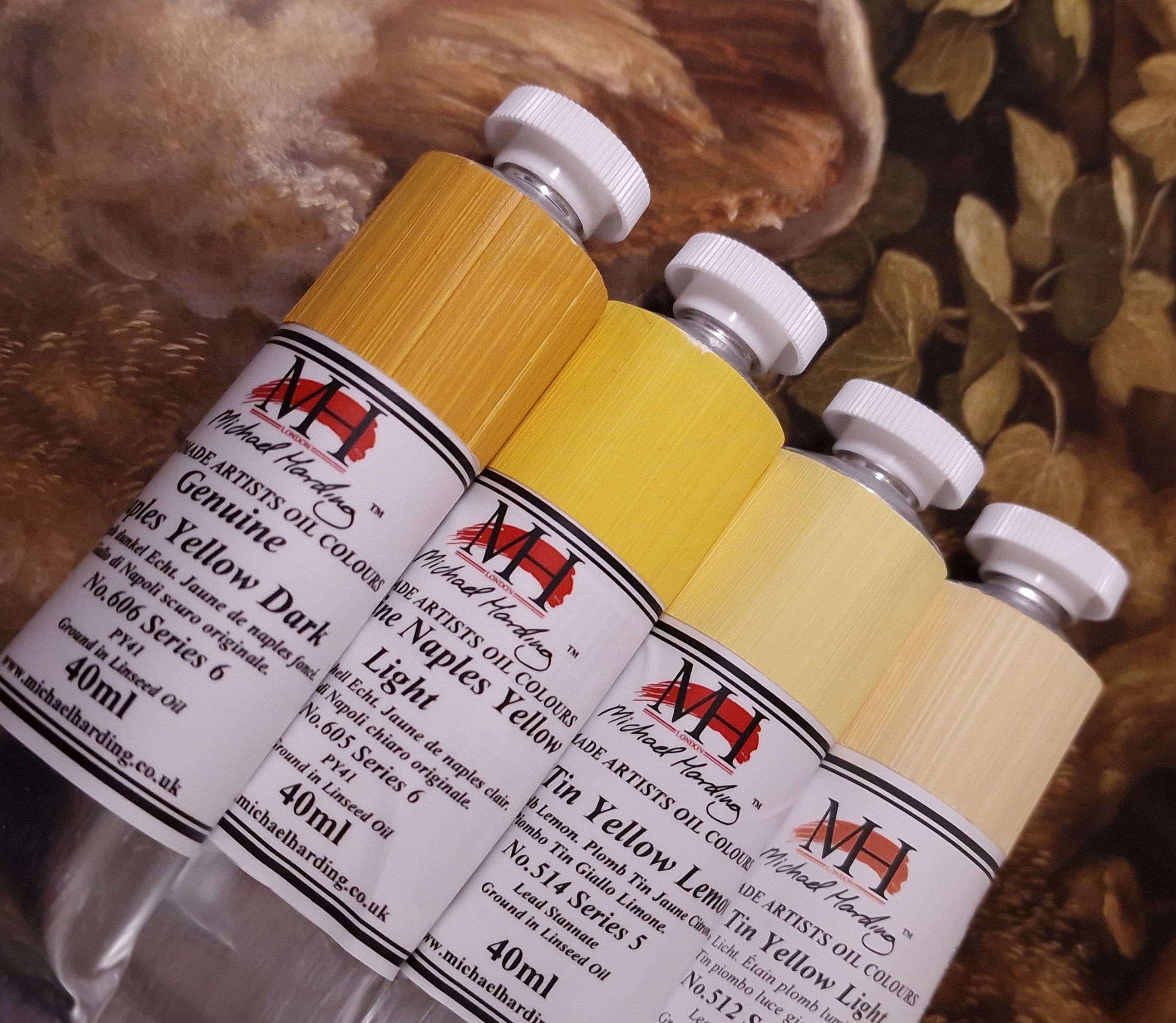
The history of artists’ materials is almost always told as a history of acquisition. At a certain moment, a new pigment appears, artists begin to use it, the palette expands, and the date of its introduction takes its place on the historical timeline. Egyptian blue. Lead pigments. Natural ultramarine. Prussian blue. Cobalts. Cadmiums. Titanium white. Phthalocyanines. Each new substance becomes another point on a line that gradually leads us towards the modern palette.
This chronology is extraordinarily useful. For art historians and conservation specialists, a pigment can function as a kind of temporal marker. If a substance was first produced during a particular period, its presence in a painting can help establish the earliest possible date of creation, reveal a later intervention, or raise questions about attribution. In this sense, materials really do carry history within them.
But there is a strange asymmetry in the way we tell that history. We are remarkably good at recording the moment when a material enters artistic practice, and considerably less attentive to the moment when it leaves. In most histories of pigments, materials seem never to disappear. Once they enter the timeline, they remain there indefinitely. The next pigment is simply added to the previous one, creating the impression of a continuous accumulation of possibilities. In this model, the modern palette appears to be the result of several thousand years of expansion: everything that existed before, plus everything invented since.
The actual history of materials is very different. Pigments cease to be manufactured. Mineral sources become inaccessible or economically unviable. Production processes change. Certain substances become restricted. Manufacturers change raw materials, suppliers, methods of precipitation, grinding, and dispersion. Small producers disappear or are absorbed by larger companies. Sometimes the name of a material survives even though the material behind that name has changed.
Perhaps, then, we need a second chronology of colour: not only when a material appeared, but when it ceased to exist in a particular form.
At first, establishing such a date might seem simple. If a manufacturer stopped producing a pigment in 2030, that must be the date of its disappearance. But with artists’ materials, the reality is much more complicated. Stocks remain after production ends. Tubes continue to sit in studios. Small manufacturers may continue using old supplies of raw pigment for some time. Artists keep materials for years, sometimes for decades. A pigment may disappear from mainstream production while surviving among a small number of specialists who continue to work directly with dry pigment.
A material may therefore have not one date of disappearance, but an entire sequence of them: the end of raw-material extraction; the end of industrial pigment production; the last known batch; the discontinuation of the artists’ paint; the disappearance of old stock from commercial circulation; and, finally, the disappearance of the material from living artistic practice.
That final date may be the most difficult to record, and at the same time the most important. A material exists within culture not simply because a specimen survives in a museum collection or its chemical formula remains in a database. It exists as an artists’ material for as long as someone knows how it behaves under the brush, how it mixes, how transparent it becomes in a thin layer, how it responds to a particular binder, what kind of surface it creates, how it changes with the thickness of the paint film, and what visual possibilities it offers to the artist.
This raises another problem. What exactly do we mean when we say that a pigment has disappeared? Its chemical name may survive. Its Pigment Index designation may remain unchanged. The same name may still appear on a tube. Yet particle size and distribution, morphology, impurities, manufacturing process, pigment concentration, binder, and method of dispersion can all alter the behaviour of a paint. Chemically, it may still be classified as the same pigment. For the artist, it may no longer be the same material.
There is, therefore, a particularly difficult form of disappearance: a material can disappear without losing its name.
We tend to treat substitution as evidence of continuity. If one material is no longer available, a manufacturer or classification system may offer the closest modern equivalent. In colour, it may indeed be remarkably similar. But colour is only one property of an artists’ material. Two pigments can produce a comparable colour while differing in transparency, opacity, tinting strength, mixing behaviour, optical behaviour within layered structures, and the way they interact with light.
From the perspective of the palette, a substitution has occurred. From the perspective of practice, something may have been lost.
For this reason, a history of disappearances should not become a catalogue of nostalgia for old materials. Not every vanished pigment should be brought back. Some materials were toxic, unstable, or environmentally unacceptable, and there may have been very good reasons for ending their production. The purpose is something entirely different: to document what disappeared with them.
This matters particularly because paintings continue to exist long after the materials from which they were made have disappeared. A hundred years from now, a researcher may be able to identify the chemical composition of a paint layer. They may even be able to determine particle size, detect impurities, and reconstruct certain aspects of the manufacturing process. What will be much harder to recover is what was never recorded: why an artist chose that particular material, what function it performed within a sequence of layers, how it resisted or moved under the brush, what degree of transparency the artist expected from it, and what decisions became possible precisely because of its physical behaviour.
The painting will preserve the material evidence. The knowledge of how to work with that material may disappear much sooner than the painting itself.
A chronology of disappearances would therefore become something more than a list of discontinued paints. It would become a way of documenting the gradual contraction of painting’s material language. Imagine such a timeline. It would record not only the celebrated dates when new pigments appeared, but also the end of particular sources of raw materials, changes to historical manufacturing processes, the disappearance of specific grades or forms, regulatory restrictions, final commercial batches, known substitutions, and the last documented instances in which artists used the original material.
Some lines would end completely. Others would continue as dotted lines: the material had disappeared from industrial production but remained alive in individual studios. Still others would split in two: the historical material disappears while its name continues to exist, now attached to a materially altered product.
Such a map would tell a very different history of art. We would see not only how artists’ possibilities expanded, but also how they contracted, transformed, and sometimes disappeared almost unnoticed. We might identify periods in which two generations of artists, nominally using the same “pigment,” were in fact working with physically different materials. We might even begin to understand more precisely why the surface, depth, or character of colour in works from a particular period can be so difficult to reproduce later.
The history of pigments has long helped us answer one question: When did this material become possible? Perhaps it is time to ask the opposite question just as systematically: When did it cease to be possible?
Because between those two dates lies more than the commercial lifespan of a substance. It marks the period during which a particular artistic possibility existed. And if we fail to record the moment of its disappearance, a future researcher may one day be able to determine what a painting was made from, but no longer fully understand what could once be done precisely because that material existed.
