We Preserve Artworks. But Do We Preserve the Possibility of Making Them?
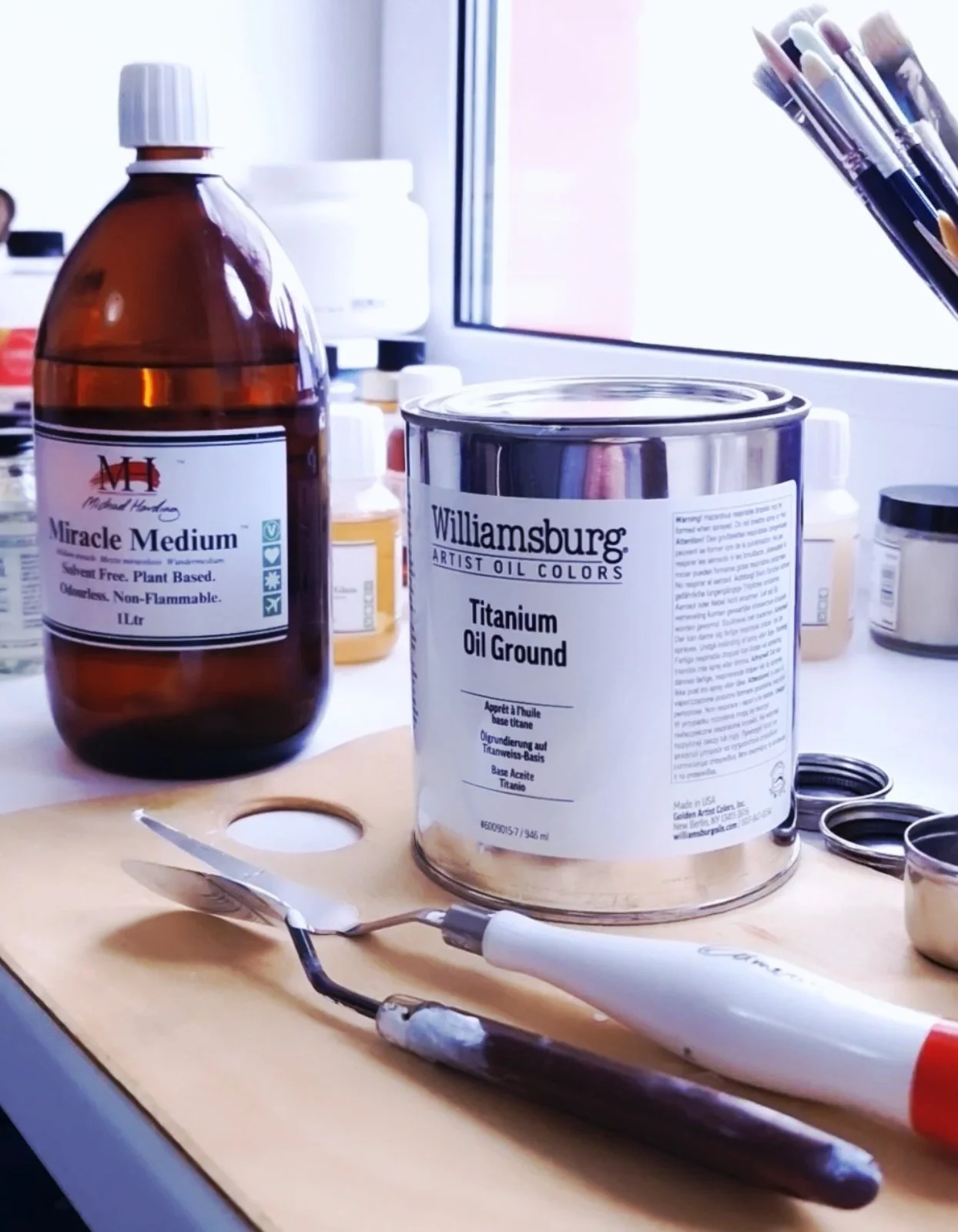
Cultural institutions have learned to preserve the outcomes of human creativity with remarkable care. When an artwork enters a museum collection, an elaborate system of responsibility forms around it: temperature and humidity are controlled, materials are studied, condition is recorded, changes are documented, and methods of conservation and restoration are developed. A significant work may physically outlive not only its maker but several generations of those entrusted with its care. Yet alongside this system lies a less visible asymmetry. We have become exceptionally good at caring for what art has already created, but we are far less adept at recognising as worthy of preservation what made that creation possible in the first place.
A painting remains while the studio disappears. A sculpture survives while the method of working its material ceases to be transmitted. A print enters a museum collection while the equipment, paper, ink, and practical knowledge of the printer gradually fall out of use. A photograph becomes part of cultural heritage after the materials and technological environment in which it was made have disappeared. This does not mean that institutions are entirely absent from such forms of loss. On the contrary, intangible heritage, the preservation of craft traditions, contemporary art conservation, performance conservation, and research into artists’ studios have already developed different ways of documenting practices, skills, and processes. Yet these approaches tend to exist within their own disciplinary territories. Between them lies a vast field of everyday artistic material practice - materials, tools, production knowledge, sensory experience, and studio skills - that does not always become the subject of institutional attention until it has already begun to disappear.
Perhaps the problem is not a lack of willingness to preserve this territory, but the fact that it fits poorly within the architecture of the traditional archive itself. An artwork is convenient for institutional thinking. It has an author, a date, dimensions, a medium, provenance, an inventory number, and physical boundaries. It can be acquired, catalogued, insured, moved, studied, and placed in storage. But where does an artist’s knowledge of how a material should behave reside? In the hand? In a sequence of actions? In a tool? In a manufacturer’s formulation? In a conversation between master and student? In mistakes that were never recorded? In the ability to recognise the moment when a surface is ready to receive the next layer? If knowledge is distributed across person, substance, tool, and action, what exactly are we supposed to place in the archive?
Perhaps we need to distinguish between two fundamentally different forms of cultural memory. The first might be called an archive of outcomes. It preserves what culture has already produced: paintings, drawings, photographs, sculptures, documents, samples, objects - everything that remains after an act of making and is capable of outliving the person who performed it. Alongside it, however, there is another, far less obvious archive: an archive of possibility. Its subject is not the artwork itself but the constellation of conditions that made a particular artistic act possible at all: materials, tools, manufacturing processes, ways of handling substances, sequences of operations, sensory criteria, professional language, mistakes, observations, and the relationship between person and material within which practical knowledge takes shape.
The archive of outcomes and the archive of possibility are not interchangeable. A hundred surviving paintings made in a particular way do not necessarily allow us to reconstruct how they were made. We may examine the paint layers of an old master with a precision unimaginable in the artist’s lifetime, identify the chemical composition of pigments, binders, and grounds, and still not possess the same knowledge as the person who built paintings from those substances every day. The ability to explain an outcome and the ability to reconstruct the system of decisions that produced it are not the same thing.
This distinction extends far beyond art. A biologist can preserve the seeds of a plant, but preserving seeds is not the same as preserving the ecosystem in which the plant can live. A linguist can compile a dictionary of an endangered language, but a dictionary does not preserve the community of speakers, its intonation, context, or the distinctions of meaning that exist within living speech. A musical archive can preserve a score, but a score does not contain an entire performance tradition. Software code can outlive the hardware environment and operating system for which it was written, and preserved code does not necessarily mean preserved ability to run it. In each of these cases, we may preserve the carrier of information while losing the system that turned information into an active possibility.
Something similar happens with artistic knowledge. We readily assume that if a formula has been recorded, a sample preserved, a technical process described, and an artwork survives, then the essential information has not been lost. But the formula of a pigment does not contain the ability to see that pigment. The recipe for a ground does not contain the understanding of when its surface is ready to be worked on. A chemical analysis of a binder does not explain how an experienced artist can recognise, through the resistance of the brush, a shift in gloss, or the character of a surface, a condition they may never have given a name. This is not a romanticisation of the “mystery of craft.” It is a thoroughly practical feature of knowledge: some of it exists not as a set of propositions, but as the ability to perceive distinctions.
That ability to distinguish may be one of the most fragile parts of material culture. To distinguish between too thick and thick enough. Between dry and ready for the next layer. Between transparent and having lost its depth. Between a surface that will still accept a material and one on which that material will already behave differently. These distinctions can be extraordinarily precise even when the person making them has never translated them into numbers or formulated them as instructions. Cultural loss, therefore, may occur not only when information disappears. It may occur when we lose the ability to perceive distinctions that preserved information alone cannot adequately describe.
At this point, the problem of the archive becomes a problem of transmission. Some forms of knowledge can be separated from the person who holds them, recorded, and returned to circulation centuries later. Others exist only for as long as an action continues and there remains an opportunity to observe it, repeat it, correct it, and pass it on to another person. In this respect, practical knowledge resembles language: a dictionary may outlive the last speaker, but the existence of a dictionary does not mean that a living language still exists. A formula may outlive a maker, but the existence of the formula does not mean that the practice survives.
Artistic practice, then, might be understood not only as the production of objects but also as a system for transmitting cultural competence. Each generation of artists inherits more than a set of materials. It inherits ways of working with them: through education, studios, manufacturers, books, observation, conversation, repetition, and its own mistakes. Some of this knowledge is then passed on. The material culture of art therefore exists in two kinds of time at once: the time of objects and the time of chains of transmission. And these two times can diverge.
An object can outlive the chain of knowledge that produced it. A painting may survive for centuries after the last person capable of working in precisely that way has disappeared. Indeed, the better we become at preserving objects, the more visible this paradox may become: the outcomes of culture can prove far more durable than the cultural competencies that brought them into being. We can preserve evidence of a possibility after the possibility itself has ceased to exist.
Perhaps this means that cultural vulnerability should be approached differently. Not only: how many objects remain? Not only: has the documentation survived? Not only: is the formula known? But: is transmission still taking place? Is there still someone capable of showing this to another person? Does the material on which it can be demonstrated still exist? Has the tool survived? Can the process still be observed in full? Is there still a language through which practitioners describe the distinctions that matter to them? Can the next generation acquire not only the information but also the experience necessary to understand it?
When even one of these links disappears, what we might call a break in transmission occurs. And perhaps it is this break in transmission, rather than the disappearance of the last object, that should be considered one of the units of cultural vulnerability. Such an approach changes the moment at which preservation becomes necessary. Instead of waiting for physical disappearance, we begin to notice the point at which knowledge still exists but its ability to pass to another person has already been compromised.
This matters especially because such loss often has no event attached to it. A building can burn down. A painting can be destroyed. An archive can be lost. Practical knowledge, however, can disappear without catastrophe. One specialist retires. One production process is no longer used. One teacher stops demonstrating a particular technique. One tool is discontinued. One material is replaced by another. The next generation of artists simply ceases to encounter a particular possibility. No one announces the final date of its existence. Nothing dramatic happens, and that is precisely why what is happening is so difficult to see.
We might call this a silent loss of competence: a condition in which a cultural system continues to preserve the outcomes of a practice after the ability to produce, understand, or transmit part of that practice has already begun to disappear. Such a loss leaves no ruins. Sometimes its only evidence is the growing distance between what we can analyse in a surviving object and what we can practically understand about the process that brought it into being.
But an important distinction must be made here. We do not need to invent the preservation of practical knowledge from scratch. Culture already knows how to work with living traditions, endangered crafts, performance, technologically complex contemporary art, and intangible heritage. Artist interviews, process documentation, reconstruction, apprenticeship, skills transmission, living archives, and other forms of knowledge preservation already exist. Perhaps the problem lies elsewhere: these tools do not always meet in the places where material artistic practice falls between existing categories. A material may be too ordinary for a museum, a technology too contemporary to be considered heritage, a skill too individual to belong to a craft tradition, and production knowledge too commercial for a cultural archive. Each individual part appears to belong to someone else. And as a result, the system as a whole may belong to no one.
Here the question is no longer simply how to preserve the past, but how culture recognises a future loss. Perhaps what we need is not a new kind of museum but a new way of seeing vulnerability: one that does not wait until a practice becomes historical, but recognises a disruption in its reproducibility while material, person, and knowledge still remain together. The aim would not be to freeze a living practice in its present form, but to preserve the possibility of transmission - the possibility for another person to see, try, make mistakes, perceive the difference, and understand what documentation alone cannot provide.
Such an understanding also changes the meaning of preservation itself. Preserving a possibility does not mean requiring future artists to work as artists of the past did. On the contrary, the purpose of preservation is precisely to allow the future to retain the right not to choose an older practice, rather than finding itself in a situation where no choice remains. There is a fundamental cultural difference between consciously rejecting a possibility and allowing it to disappear unnoticed. In the first case, culture makes a choice. In the second, it eventually discovers that the choice has already been made for it - by time, the market, technology, or the simple interruption of transmission.
An archive of possibility, therefore, should not become a machine for reproducing the past. Its task is far more interesting: to preserve a sufficient density of material and practical knowledge for the future to enter into a relationship with it again. Not to force the next artist to repeat the gesture of a predecessor, but to ensure that the gesture remains intelligible, open to investigation and, if necessary, accessible again as a possibility.
Perhaps this is where the next frontier of cultural preservation lies. For a long time, the central question was: how do we preserve the object? Today, we increasingly need to ask another: how do we preserve the conditions under which the knowledge surrounding an object remains active? The answer will require not only storage and catalogues, but laboratories, process recordings, comparative experiments, interviews, skills transmission, and observation of how people make decisions in direct contact with materials. Most importantly, perhaps, it will require learning to act before a practice becomes history. After disappearance, we can study traces. Before disappearance, we can still ask a person, ask them to demonstrate, and allow someone else to try.
I am therefore increasingly uncertain that cultural heritage begins with the artwork. Perhaps the artwork is only the most visible part of a much larger system. Behind it are materials, hands, tools, manufacturers, studios, languages of description, ways of perceiving distinctions, mistakes, repetitions, and decisions, most of which will never receive an inventory number. It is from this invisible infrastructure that the object emerges - the object that a museum may later preserve for centuries.
We have built an extraordinarily sophisticated system for preserving what art leaves behind. Perhaps the next step is not to expand that system indefinitely by turning everything surrounding artistic practice into heritage, but to learn how to recognise a break in transmission before it becomes irreversible.
Because there is a paradox that the cultural system of the future may no longer be able to ignore: we may preserve more and more artworks while simultaneously losing more and more ways of understanding how those artworks could ever have become possible in the first place.
And then we may be left with a beautifully preserved history of art - but with ever less access to the archive of possibilities from which that history once emerged.
