WHEN TECHNICAL KNOWLEDGE HAS NO PROVENANCE
An artist asks a generative system a technical question about the composition of an oil paint and, within seconds, receives a detailed answer about the binder, pigment properties, durability, and the practices of professional manufacturers. Another artist phrases almost the same question differently and receives a different explanation. Both answers may sound professional and influence the choice of material. Yet neither linguistic confidence nor the amount of technical detail is sufficient, in itself, to establish what evidence supports each claim contained in the response.
For technical knowledge, this matters. Information about an artists’ material may derive from laboratory analysis, a manufacturer’s technical documentation, the examination of a historical object, a published experiment, an artist interview, or direct observation in the studio. These sources have different evidential status and different limitations, but they allow questions that can be investigated: Who made the observation? Which material was examined? Under what conditions? By what method? How far can the resulting conclusion legitimately be extended?
Generative systems introduce a different mode of producing technical statements. They can describe the working properties of a paint without direct material experience: they have not observed its consistency on the palette, mixed it with other paints, compared its behaviour in thin and thick layers, or followed changes in its surface during drying. The absence of such experience does not, by itself, invalidate a technical claim. A substantial part of our knowledge of artists’ materials is produced through analytical and documentary methods. In those cases, direct observation is replaced by evidence that can be examined and critically evaluated.
The problem arises when the user cannot establish what, precisely, compensates for the absence of direct observation. From the generated response alone, it may not be possible to determine whether a particular technical specification, manufacturer’s document, or research publication was actually used as evidence for a particular claim. Even the presence of a list of sources does not necessarily establish the relationship between an individual claim and the evidence on which it depends.
A distinction therefore has to be made between the correctness of a statement and its warrant. A technical statement may be entirely correct while still giving the user no means of establishing why it should be trusted, which specific material it applies to, or where the limits of its applicability lie. A technically correct statement and a technically warranted statement are not the same thing.
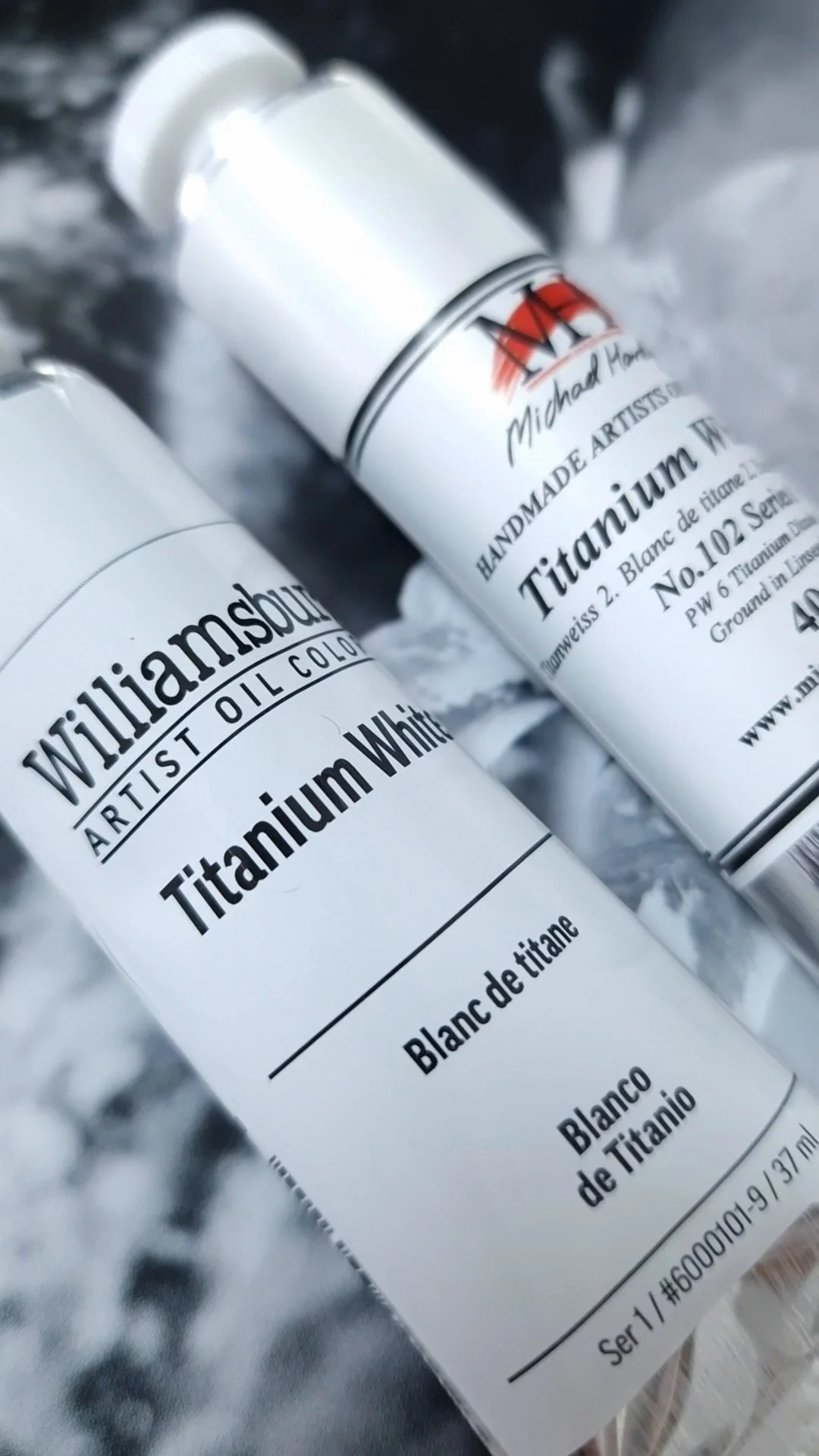
Consider a plausible statement: “Manufacturers of high-quality professional paints do not use linseed oil in whites.” In form, this presents itself as an established industry practice. Evaluating it requires more than deciding whether it sounds technically convincing. Which manufacturers are being described? Which white pigments and specific products? What binder is actually used? Does the information refer to the current formulation? What evidence supports the generalisation?
This is precisely where the scope of a claim can shift. An observation that is valid for one manufacturer, a particular product range, a specific white pigment, or an individual formulation may lose its original boundaries and begin to function as a rule for an entire category of materials. The statement may still contain real facts and correct terminology. The distortion occurs when their field of applicability expands beyond the evidence.
Professional knowledge often reveals itself through an ability to recognise these boundaries. An artist, technologist, manufacturer, or researcher who knows a material well also knows which further questions need to be asked before a specific observation becomes a general rule. Which formulation? Which pigment? Which version of the product? Under what conditions was the behaviour observed? What is known directly, and what has been inferred from other evidence? Expertise is expressed not only in the number of answers available, but also in the ability to identify the limits of a claim.
A generative system can produce a confident generalisation before the user has established those limits. The result is a form of technical authority that may be difficult to distinguish linguistically from expert knowledge, while the evidential basis and scope of the individual claim remain untraceable.
This makes the problem broader than the familiar question of errors or hallucinations. A generated text has a causal history. The user, however, may not be able to reconstruct the relationship between a particular technical claim and the evidence supporting it. The provenance of the document and the provenance of an individual claim become different problems.
Another process begins once the answer has been received. An artist follows the recommendation and tells colleagues about it. A teacher passes it on to students. The statement appears in a video, an article, or a professional discussion. The next person encounters it not through a generative system but through an actual artist, teacher, or author.
The claim now has a transmission history.
But a history of transmission does not restore a missing evidential basis. A claim can acquire provenance without acquiring evidence. It may now have an author, a date, a publication, and several generations of human transmission, while the basis of the original technical claim remains unknown.
Several surviving sources do not necessarily represent several independent bodies of evidence. An article, a lecture, and a video by different authors may appear to corroborate one another while ultimately descending from the same synthesised claim. The number of documents may then exceed the number of independent evidential sources. The history of circulation becomes richer, but the evidential basis does not become stronger.
For artists’ materials, this informational history has a particular continuation because a technical claim can pass into a physical object.
An artist chooses a particular ground, binder, solvent, pigment, or medium; changes the sequence of layers; rejects one material in favour of another. Between the information received and the material choice lies a decision whose own history may also disappear from the record. Even if the original technical advice can be recovered decades later, this does not establish that it caused a particular action. The artist may have been guided by previous experience, material availability, a teacher’s recommendation, or several sources at once.
The concept of decision provenance is already used in research on algorithmic systems to trace inputs, decisions, and their consequences. Applied to artistic practice, it allows a related but materially specific question to be asked: what role did a particular piece of information play in a decision that changed how an object was made?
At this point, an informational problem becomes a material one.
A technical claim influences a decision; the decision determines a material or technical operation; that choice becomes part of a layer, surface, or structure of the painting and participates in its subsequent ageing. The information no longer exists solely as text. It becomes one of the factors involved in the production of a physical object.
Fifty or a hundred years later, the situation may be asymmetrical. A conservator may be able to identify pigments, examine the binder, investigate the stratigraphy, and detect ageing products. The material consequence of the decision may survive and remain measurable. The informational cause of that decision may have disappeared entirely.
The artist’s notebook may not have survived. Correspondence with a manufacturer may have been deleted. A teacher’s verbal recommendation may never have been recorded. A generative conversation may never have entered an archive. The material object may therefore outlive part of the informational history of its own making.
This matters for technical art history. The study of artistic practice combines physical examination of objects with instrumental analysis, documentary sources, observations of artists at work, interviews, and reconstructions. These methods make it possible to investigate not only what an artwork was made from, but also the processes and decisions that shaped its material structure. In the artistic practices of the 2020s and 2030s, a new informational intermediary enters this system of sources: one capable of participating in artists’ technical decisions without necessarily leaving a durable claim-level record of the evidence supporting the information it provided.
A reverse loop can also develop. A synthesised claim is published by a human author, circulated, cited, incorporated into educational material, and potentially returned to the information environment used by subsequent generative systems. The human document now genuinely provides historical evidence that a particular claim circulated. It does not necessarily provide independent confirmation that the content of the claim was correct.
For the Material Memory Project, this expands the concept of material evidence. Information involved in the selection of a material cannot automatically be treated as external to the material history of an artwork. If technical advice changed how an object was made, it entered its causal biography, even if the advice itself never existed in a durable material form.
This creates a documentation problem. What should be preserved when information becomes a material input? The prompt and the response? The date and the system used? The sources it cited? Or, more importantly, the point at which the artist verified the information and decided to act on it? Recording every informational interaction would be neither possible nor particularly useful. The question, then, is how to define a minimum unit of documentation sufficient for the future reconstruction of significant technical decisions.
Within this chain, it is useful to distinguish the provenance of a technical claim, its evidential basis, its scope, its transmission history, its role in a particular decision, and its subsequent material consequence. This need not constitute a new universal taxonomy. It is better understood as a working structure for examining the point at which information begins to participate in the material biography of an artwork.
The history of artists’ materials has always contained lost recipes, vanished manufacturing processes, closed workshops, and skills transmitted without written documentation. What is new is not the existence of incomplete knowledge. An informational gap can now be filled almost instantly by a technically convincing explanation whose linguistic form does not, by itself, reveal how firmly the evidential basis of its individual claims has been established.
For the future researcher, the problem may therefore involve more than a shortage of evidence. It may require determining which surviving documents contain independent technical evidence and which instead record the later human circulation of a claim whose original basis can no longer be reconstructed.
The information may disappear while its material consequence survives.
A painting may physically preserve the consequences of technical knowledge for longer than the evidential history of that knowledge survives. The technical information available to an artist then becomes part of the investigation of an artwork’s material biography: not only what it was made from and how, but also what information participated in the decisions that shaped the object.
What happens when the material consequence survives, but the evidence behind the decision does not?